


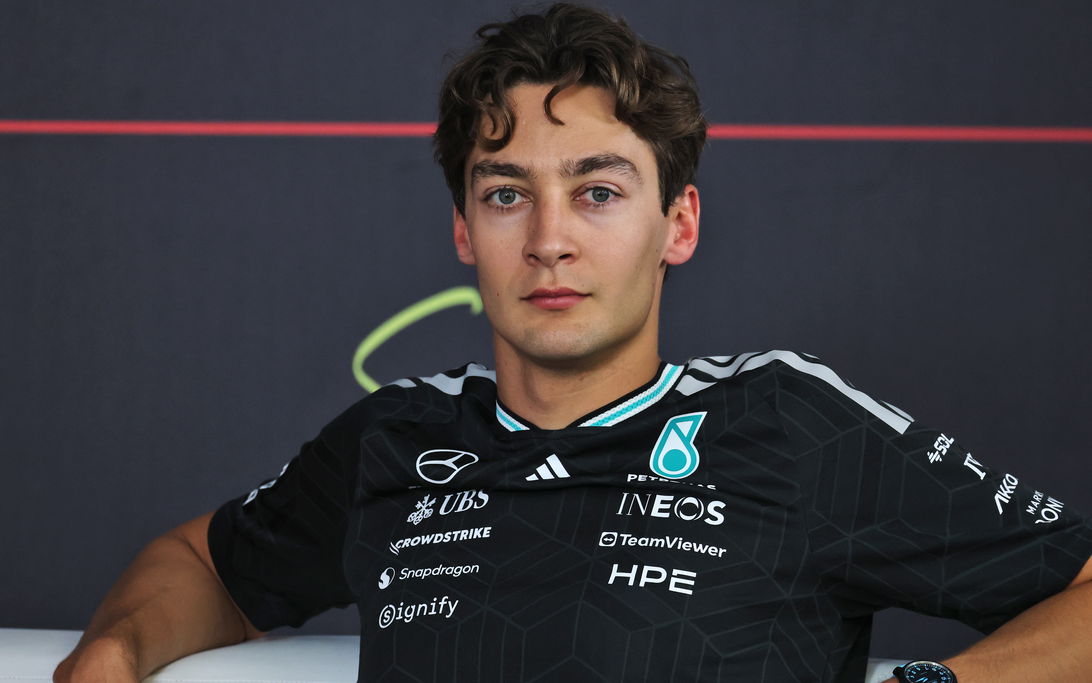
George Russell has explained how F1 drivers and the FIA are enjoying the "closest relationship in years" during talks in which certain demands over the 2026 rules have been raised.
With F1 hosting no grands prix during April, the unexpected break has allowed the governing body, teams, and drivers to discuss potential changes to the regulations based on issues which have arisen across the first three grands prix.
Chiefly among them have been qualifying, where cars, on certain tracks, have been unable to commit to full power, and must super-clip to harvest energy, with the run to Turns 9 and 10 in Australia and 130R in Japan exposing the issue.
Drivers have also been discussing the impact of closing speeds after the incident involving Oliver Bearman and Franco Colapinto in Japan, with Russell, a GPDA director, explaining how there was a focus on "abnormal areas" of the track as he gave an in-depth update on the otherwise private discussions between the parties.
"Regardless of the incident in Japan, a discussion was always planned with all of the drivers, F1, and the FIA on how to make small improvements to these regulations," Russell told media, including RacingNews365.
"Of course, there are things we want improving, like flat-out qualifying and not having to do lift and coast, and there have been some very positive conversations with the FIA, and everybody is aligned with what we're trying to achieve.
"I think the two headline points are flat-out qualifying, so no lift and coast and then reducing the closing speeds.
"The closing speed of the [Oliver] Bearman [Franco] Colapinto crash was twofold. One was Bearman on his boost button, giving himself 350 kilowatts, so he had an abundance of power in an abnormal part of the track, and on the flip side, Colapinto used his boost on the straight before, on the main straight, half a lap before, so he was low in his battery, so he had a lack of power.
"The FIA are definitely very much aware of that, and from the driver's perspective, just looking to reduce that closing speed in abnormal areas, and especially in non-SM modes. If there's a straight that isn't an SM mode, that means it's because it's a corner, and of course, that the Bearman crash was in a non SM part of the track, so we're all aligned on those points.
"There will be a compromise somewhere, because right now, the cars are set up to produce the fastest lap times possible, which is leading to the lift and coast driving style and a bit of energy management here and there, but there is some low-hanging fruit.
"For example, the 350 kilowatt superclip is a no-brainer, and that already, in itself, is going to avoid a lot of lift and coast.
"Some small changes around these regulations will have a major improvement for the overall driving experience.
"The FIA have been in a lot of communications with a handful of drivers, and at least from the FIA technical standpoint, it's probably the closest relationship we've had with them in numerous years, so that's very positive to see."
Also interesting:
Join RacingNews365's Nick Golding and Samuel Coop as they dissect the major story of Gianpiero Lambiase leaving Red Bull to join McLaren. The impact of Lambiase leaving is discussed and what it means for Max Verstappen, plus the FIA's April meetings are looked into.
Rather watch the podcast? Then click here!


Most read
In this article
Never miss a thing from the Formula 1 season! Add the 2026 F1 schedule to your calendar at the touch of a button. Subscribe below and put the dates and times of every race directly on your PC or smartphone, so you don't miss a second from the new season.
Download the F1 calendar Download the F1 calendar
A variant with just the race and qualifying is also available.
Click here to download it..





Join the conversation!