


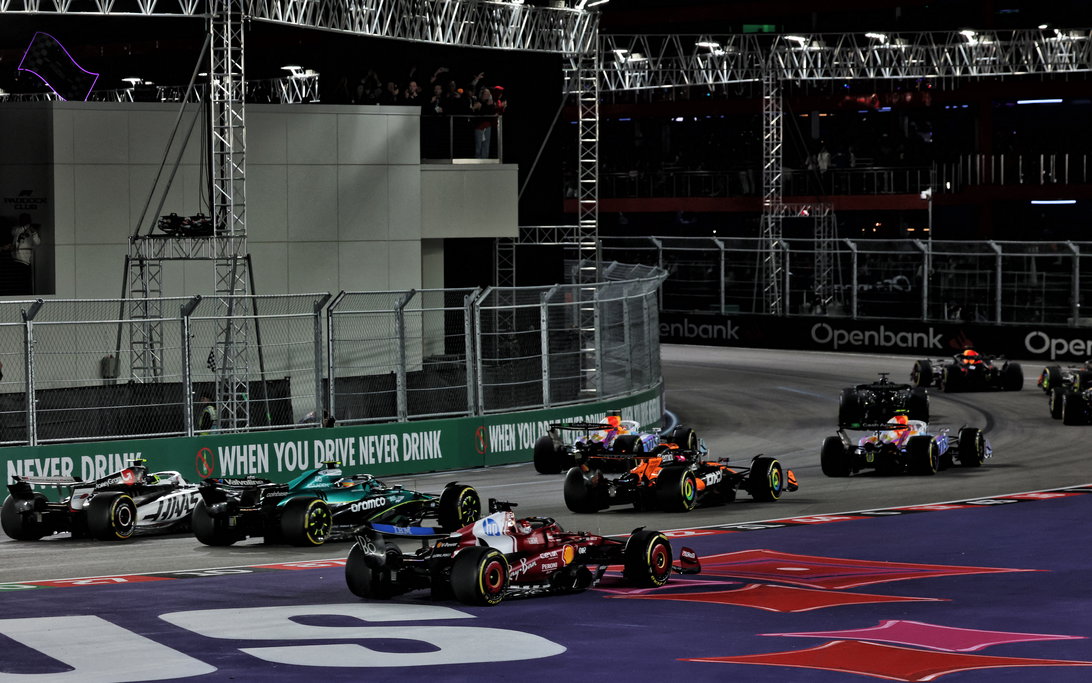
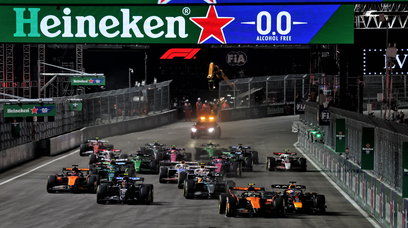
The Las Vegas Grand Prix this weekend will be unlike anything F1 drivers have experienced thus far in 2026.
Although the car systems are well understood as we approach Round 21 of 23, the conditions in Nevada promise to be a real head-scratcher.
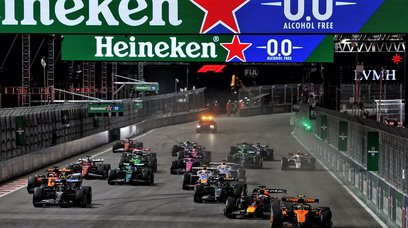
The two complicating factors are the cold climatic conditions and the very layout of the Strip circuit itself.
The mercury is not forecast to get above 10-15 degrees Celsius all weekend in Nevada when the cars are on-track, with Las Vegas noticeably colder during the night than the day.
This is because there is often little cloud cover in Sin City at night, meaning heat cannot be trapped in as it burns off beneath the clear skies, with the desert also a poor heat trapper.
As such, with the cold air and track conditions, the tyres cool down.
This is then exacerbated by the very nature of the track itself.
With its long straights, including the long blast down the Strip, the tyres cool down as they are not being worked to generate temperature. Following this, there are no high-speed changes of direction on the circuit, such as the Esses at Suzuka or Maggots and Beckets at Silverstone, to force energy and heat through the tyre to generate temperature.
With this lack of opportunities to force heat into the compound with the high number of low-speed corners, the tyres then cool further, meaning it becomes a vicious circle as drivers cannot generate heat as they have so little grip - and because they have so little grip, they cannot push to generate temperature.
Another, additional complication in 2026 is the power units.
With their 50:50 split in power output between the ICE and the batteries, it means on long straights, cars slow down as the battery drains.
This means at the left-right-left chicane at the end of the Strip before the turn for home, cars will be arriving even slower than in previous years - thus with less energy, which makes it harder to generate temperature.
[Article continues below]
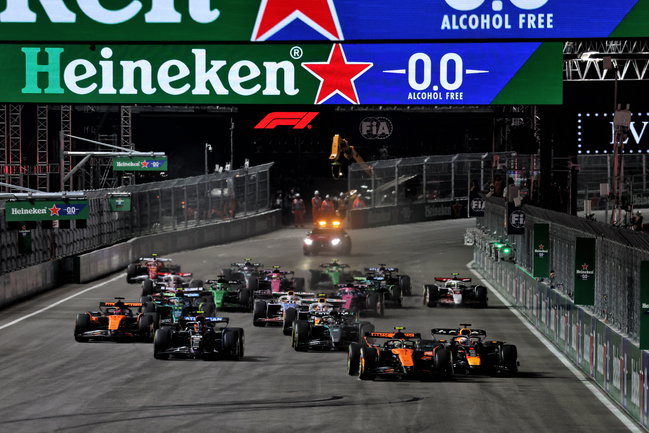
But all is not bad
On the flip side, the low-energy, low-heat demands placed on the tyres mean that degradation and wear are seldom encountered in Las Vegas.
This means drivers are able to push flat out on their tyres during stints, with a one-stop flat-out blast expected around the 50 laps, in conditions similar to Azerbaijan.
With tyre warm-up expected to be difficult, drivers are likely to complete multiple warm-up and prep laps in qualifying, as opposed to a single out-lap before attempting a flying lap.
For the race, it means that an overcut, where a car stays out for longer as it has tyre temperature, is likely to be effective over the usual undercut.
Also interesting:
Join RacingNews365's Ian Parkes, Sam Coop and Nick Golding, as they look ahead to this weekend’s Las Vegas Grand Prix! The fight for second in the drivers’ standings is a key discussion, as is why Ferrari could be set for a horrific trip to Sin City!
Rather watch this episode? Then click here!


Most read

In this article
Never miss a thing from the Formula 1 season! Add the 2026 F1 schedule to your calendar at the touch of a button. Subscribe below and put the dates and times of every race directly on your PC or smartphone, so you don't miss a second from the new season.
Download the F1 calendar Download the F1 calendar
A variant with just the race and qualifying is also available.
Click here to download it..


Join the conversation!