


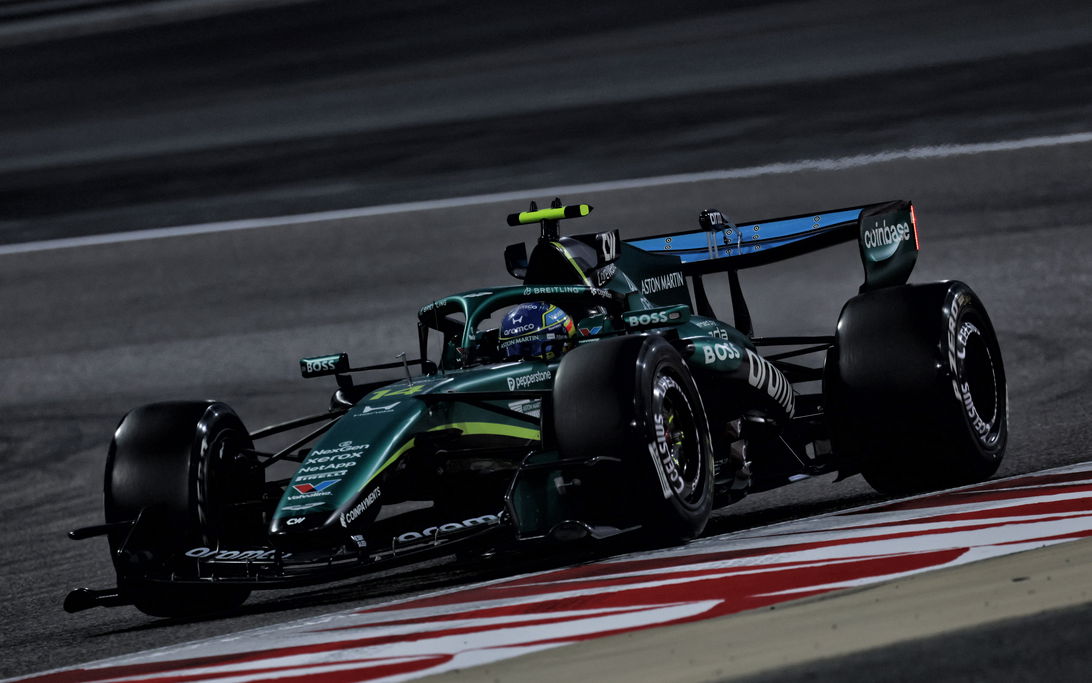
Fernando Alonso has laughed that the Aston Martin chef could drive the current F1 cars through some corners due to the dramatic speed reduction compared to past seasons.
The F1 power units have undergone a significant change this year with increased focus on energy deployment, as the battery output now equals the combustion engine.
The drivers are now having to consider when and how to harvest energy in order to deploy it down the straights.
Using an example from the Bahrain International Circuit, which is hosting pre-season testing this year, Alonso highlighted the flat-out Turn 12 curve is being tackled at a much lower speed as drivers prioritise saving energy.
“Historically, Turn 12 is a very challenging corner,” Alonso told media including RacingNews365.
“You used to choose your downforce level to go [through] Turn 12 just flat.
“It was a driver skill, a decisive factor to go fast in a lap time. Now in Turn 12, we are like 50 km/h slower because we don't want to waste energy there.
“We want to have it all on the straights. So, to do Turn 12 instead of 260 km/h at 200 km/h, you can drive the car. The chef can drive the car in Turn 12 at that speed.
“But you don't want to waste energy because you want to have it on the straight.”
Article continues below.
Viewed by others:
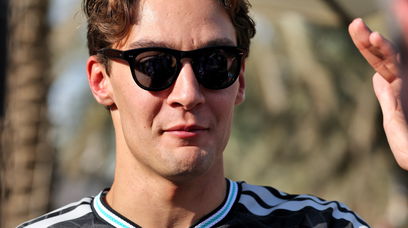
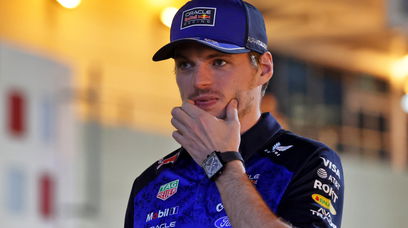
Alonso 'understands' Verstappen's complaints
The new approach to driving the cars was heavily criticised by four-time champion Max Verstappen.
The Dutchman likened it to Formula E on steroids as he suggested the new generation of challengers could hasten his exit from the sport.
While Alonso understands his peer's reservations, Alonso acknowledged it is simply the newest challenge F1 drivers must hurdle.
“I understand Max's comments, because from a driver, you would like to make the difference in the corner, driving those five km/h faster,” he said.
“But now you are dictated by how much energy your engine will have on the next straight.
“But at the same time, this is F1 and has always been like that, now it's the energy. Last year or two years ago, when he won all the races, it was the downforce.
“He could go in the corners at 280 km/h and we could go in the corners at 250 km/h because we didn't have the downforce.
“At the end of the day, this F1, we close the visor, we go motor racing.”
Also interesting:
In this video, we explore a fascinating Mercedes engine theory that is engulfing the F1 paddock. We break down how it works, why it matters, and why this advantage — if real — may be brilliant, legal… but only temporary.
Most read
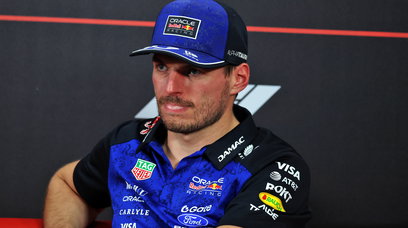
In this article
Never miss a thing from the Formula 1 season! Add the 2026 F1 schedule to your calendar at the touch of a button. Subscribe below and put the dates and times of every race directly on your PC or smartphone, so you don't miss a second from the new season.
Download the F1 calendar Download the F1 calendar
A variant with just the race and qualifying is also available.
Click here to download it..





Join the conversation!