


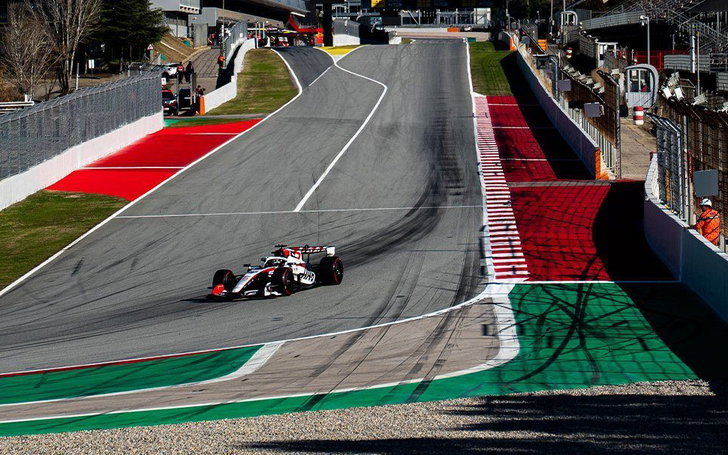
Haas team principal Ayao Komatsu has warned that considerable time losses can be expected early in the season as the drivers try to adapt to F1's new regulations.
For this year, a major change to the power unit means it is now driven by a 50-50 split between combustion and electrical energy. In tandem, the MGU-H has been eradicated, with power from the MGU-K increased from 120kW to 350kW.
As the drivers discovered during the shakedown test at Barcelona's Circuit de Catalunya at the end of January, F1 is very different to what they have been accustomed to, and they will have to drive and adapt accordingly to master its new intricacies.
They will continually be questioning themselves as to when best to deploy the energy at their disposal to assist with overtakes, and how best to again harvest the energy after it has been used.
Asked of Komatsu whether any time loss over a lap would be 'a tenth or something like that', speaking to select media, including RacingNews365, he replied: "If it were only a tenth, I'd be happy."
Komatsu has made clear it will be obvious to everyone watching if a driver has made a mistake with harvesting and deployment.
"In terms of visibility for the fans, they will see straight away if somebody is not deploying correctly," he said.
"Let's say in starting a qualifying lap, [heading] down a big straight, going into turn one, if somebody is not going very quickly straight away, they will say, 'They didn't do it correctly', so I think it will be very visible, especially earlier on.
"I'm sure you guys [the media] will see [during testing] in Bahrain, people doing quali simulation, and how consistently everyone's doing it.
"Mainly speaking from my experience, I haven't had time to really digest everybody else's GPS data. Maybe Mercedes' hasn't got that inconsistency, but, for sure, harvesting is very condition-dependent, driver operation-dependent.
"Then the software needs to work very well to have robustness, if you like. So there is more vulnerability at the start of the season.
"If something goes wrong, I think it will be pretty obvious, because we're not talking about a tenth. You can lose half a second, six-tenths, seven-tenths very, very easily. That's a scary bit."
Viewed by others:
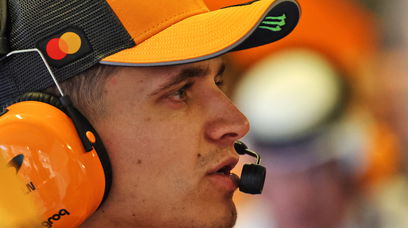
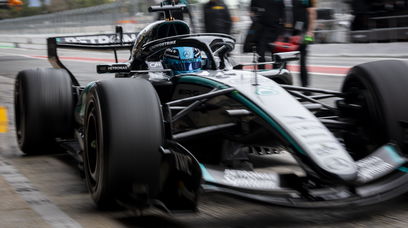
Haas facing 'good and bad challenges' with new rules
From Komatsu's perspective, it means his drivers, Oliver Bearman and Esteban Ocon, will have to work more closely than before with race engineers, Ronan O'Hare and Laura Mueller, to maximise every lap.
Expecting mistakes to occur early on, and whether they would be more on the part of the driver or engineer, Komatsu said: "Honestly, I don't think you can separate drivers and engineers in this instance.
"But this is the good and the bad challenges of these new regulations.
"The drivers and engineers really need to work together in a much more integrated way than before. Of course, to develop the car, even with the previous regulations, driver feedback is the key.
"But in terms of this energy management, how much can we load the drivers up? How much can we expect from a driver on every single lap during a race? It really is a team effort, including the drivers.
"I don't think you can say it's more from the driver, or more from the team. It's really both together."
Also interesting:
Join RacingNews365's Ian Parkes and Nick Golding, as they look back on last week's five-day F1 test in Barcelona. McLaren's upgrade strategy is discussed, as is Aston Martin grabbing much attention with its striking AMR26.
Rather watch the podcast? Then click here!


Most read

In this article
Never miss a thing from the Formula 1 season! Add the 2026 F1 schedule to your calendar at the touch of a button. Subscribe below and put the dates and times of every race directly on your PC or smartphone, so you don't miss a second from the new season.
Download the F1 calendar Download the F1 calendar
A variant with just the race and qualifying is also available.
Click here to download it..





Join the conversation!