


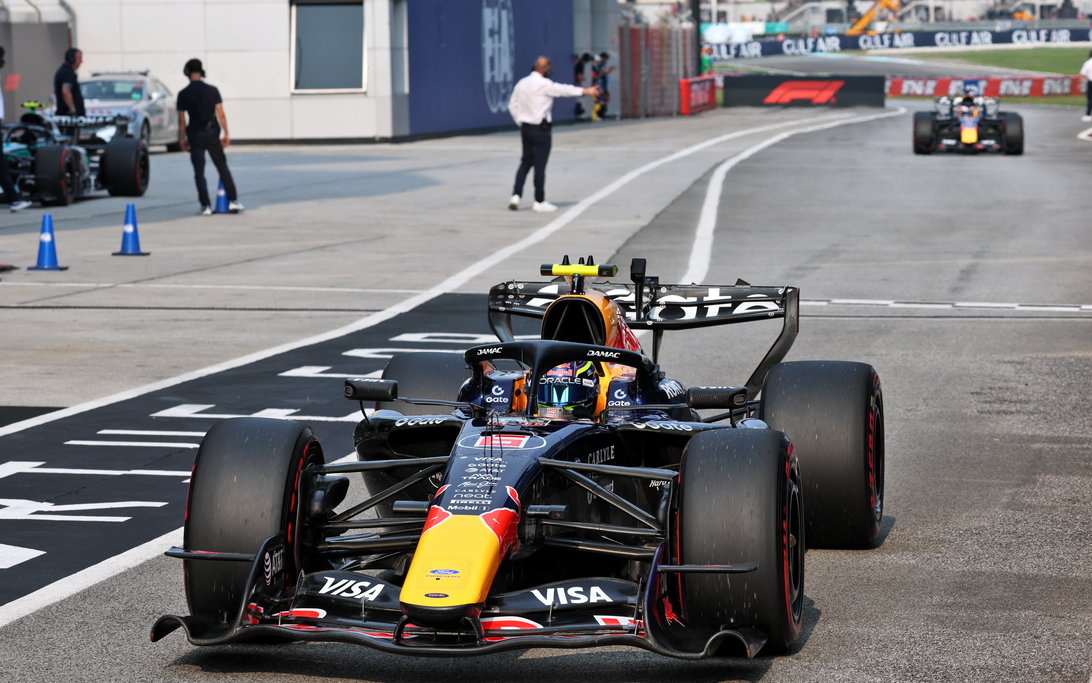
Teams face a genuine split on strategy for the Bahrain Grand Prix at Sepang International Circuit, with both two-stop and three-stop approaches considered viable over the venue's abrasive surface.
Pirelli has brought the C2 as the hard, C3 as the medium and C4 as the soft compound for the weekend.
With Sepang's coarse asphalt and track temperatures expected to push past 50°C, tyre wear has been severe across all corners of the car throughout the weekend.
The most straightforward two-stop route is medium to hard to hard, starting on the C3 for a wider opening pit window and better thermal resistance on a heavy fuel load.
That reduces the risk of the early drop-off that has plagued cars running soft tyres on a full tank in the hot conditions.
A more aggressive version of the two-stop swaps the opening stint to Soft, trading early degradation risk for stronger initial grip and track position off the line, before reverting to Hard tyres for the remaining two stints.
Verstappen's one-set problem
A third two-stop variation, medium to hard to soft, is also on the table, but appears far less likely for most of the field.
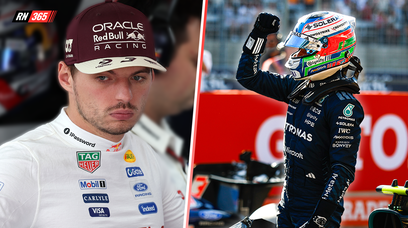
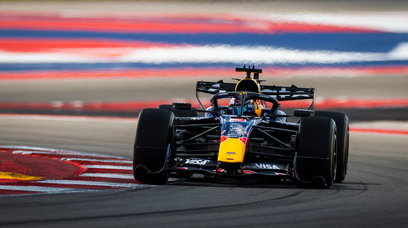
That strategy is understood to be a live option specifically for pole-sitter Max Verstappen, who goes into the race with only one usable set of hard tyres remaining, as does Ferrari's Charles Leclerc.
The shortage means the four-time champion may be forced into finishing the race on softs rather than completing a second hard stint, a limitation that has been described as a potential strategic headache for Red Bull given Verstappen's grid position and the narrower tactical flexibility that comes with a reduced tyre allocation.
The alternative route being modelled by several teams is a three-stop strategy: soft to hard to hard to medium.
With the standard pit-lane time loss at Sepang estimated between 22.5 and 23.7 seconds, an extra stop is a significant investment, but it will become worthwhile if degradation outpaces the time needed to recover that loss through clean air and fresher rubber.
Sepang's historical Safety Car probability sits at roughly 20 per cent, meaning most teams are basing their calls on raw pace and tyre wear rather than banking on a neutralisation.
Most read


In this article
Never miss a thing from the Formula 1 season! Add the 2026 F1 schedule to your calendar at the touch of a button. Subscribe below and put the dates and times of every race directly on your PC or smartphone, so you don't miss a second from the new season.
Download the F1 calendar Download the F1 calendar
A variant with just the race and qualifying is also available.
Click here to download it..





Join the conversation!