


Before we get into a great debate around the state of Formula 1’s new technical regulations after the Australian Grand Prix, perhaps it would be prudent to remember exactly why and how F1 created this latest formula.
It was just six years ago that F1 was in a genuine crisis as the full, devastating impact of COVID-19 was felt on a championship, which lives by the sponsor money it generates, and so nearly died by the lack of it as racing was suspended until July 2020.
McLaren, F1’s second most iconic team, was close [months in the words of Zak Brown] to going bust, with only a $185 million cash injection from the Bahrain sovereign wealth fund, Mumtalakat, keeping the Woking show on the road.
By 2022, the lucrative flyaway races such as Australia and Singapore returned to go with the high-paying Qatar and Saudi Arabian additions, but F1 was still on shaky ground, just around the time discussions were taking place over the form and shape of the 2026 regulations.
In mid-2022, Ford, Porsche and Audi were all part of the discussions being held, whilst Michael Andretti was running around the Miami paddock trying to strong-arm the existing 10 team principals into signing a piece of paper to agree that his idea for an 11th team was a goer.
At the 2022 Belgian GP, it was formally announced that the Volkswagen Group would enter from 2026, with Audi entering as a full works team, including, crucially, designing its own power unit.
In time, Ford would enter as a technical partner to Red Bull’s in-house project, and Andretti’s team would get the 2026 nod, although he has nothing to do with the project, and it is General Motors’ Cadillac instead, but it was Audi’s capture which was the real coup de grace for F1.
The article continues below.
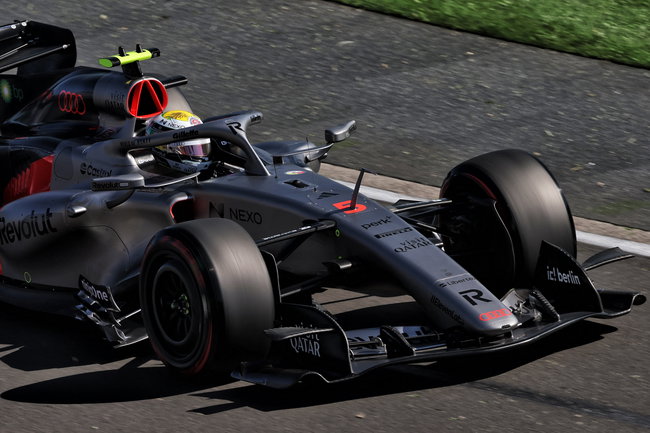
It is fair to say that the 2026 engine formula had been specifically designed to lure in Audi, with the removal of the MGU-H and 50-50 split in power output between the internal combustion engine and battery systems being the key hook.
This decision to go for the split in power generation is the basis on which the rest of the 2026 car was built. For context, in 2025, the last generation of the original turbo hybrid units ran with an 80-20 split in terms of power output, with the new ratio meaning around 450bhp is generated through the batteries alone.
An immediate concern about this power split was that with standard drag levels with the front and rear wings in their default ‘high-downforce’ position, the cars would be burning through the energy supply faster simply to get through the air resistance, let alone consider an overtake on a rival.
This is where active aerodynamics were born, with straight mode in particular being crucial, with four helpings being available around Melbourne’s Albert Park in the season opener.
Put simply, without the new power units, straight mode would not exist. No wonder, therefore, that after the Australia season-opener, Williams driver Carlos Sainz gave a withering assessment of the new mode, labelling it as a “plaster to a solution for an engine formula that, for me, just doesn't seem to work very well right now".
After the race, one graphic posted by the F1 social media team sparked great controversy on social media, with it showing that in 2026, there had been 120 overtakes in the race compared to just 45 in the chaotic wet, dry, wet, dry opener 12 months ago.
This was quickly rounded upon across social media as being a mirage, with the general point being that the ‘overtaking’ was false and exaggerated by the early stages of drivers figuring out how to use their energy modes in competition for the first time.
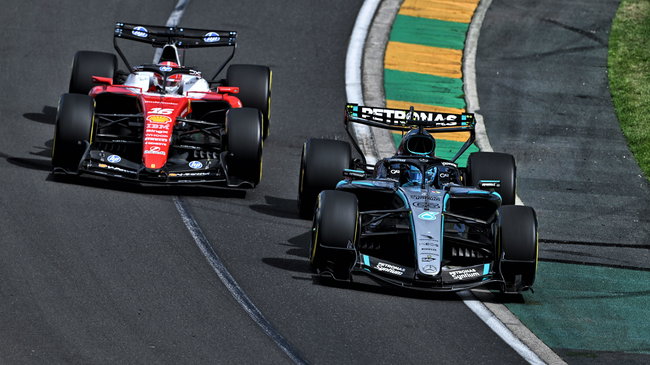
In the first 11 laps, George Russell and Charles Leclerc swapped the lead between them seven times. Battery state of charge, aided or not, what we got in the first grand prix of a new regulation set was thrilling, wheel-to-wheel racing for the lead of said grand prix.
Isn’t that what we tune in for and hope to watch? Isn’t that the whole point of being here and spending hundreds of millions of dollars every year to race around the world in funny-shaped circles, and after doing that 24 times, crown a champion driver and a champion team? Isn’t that what the F1 world championship has now done 1,150 times between May 13th, 1950 and March 8th, 2026?
The article continues below.
The world champion is wrong in his criticism
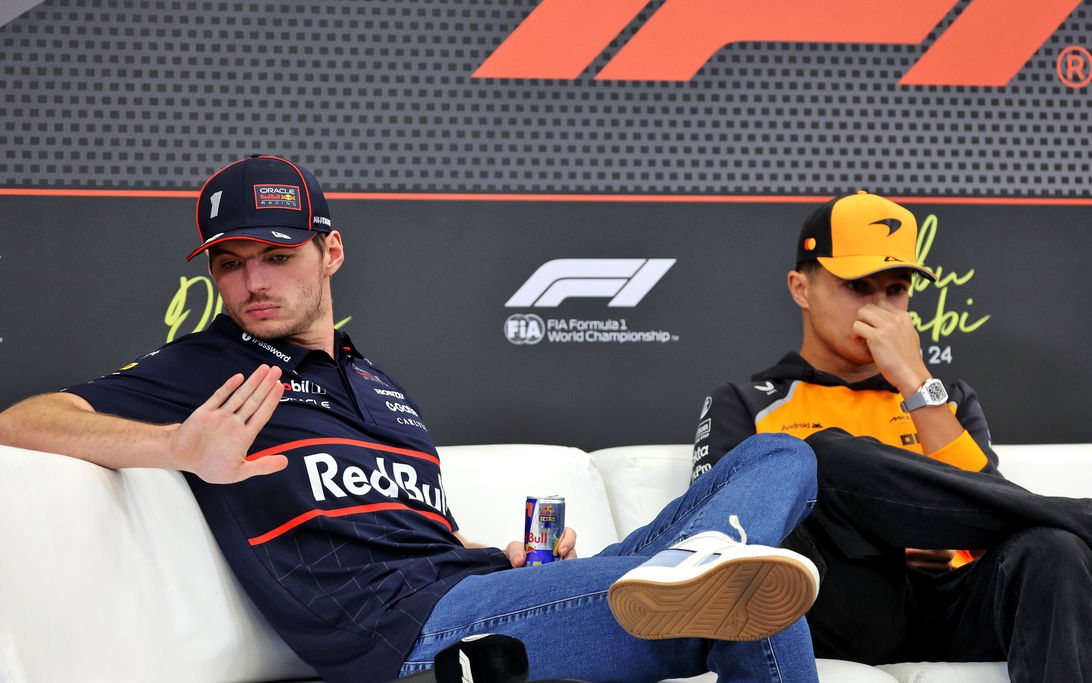
During the weekend, world champion Lando Norris was pretty vocal in his criticism of the new rules, as he kicked off his title defence with a fifth-place finish: “We've come from the best cars ever made in Formula 1 and the nicest to drive to probably the worst,” he said.
“It sucks, but you have to live with it.”
Quite often, F1 racing is a paradox of itself. The idea and desire for closer racing between rival teams is something of a misnomer, as the more refined and developed a car is, the happier the lump of squishy organic material strapped into it, is. Grip and downforce beyond their wildest dreams, eye-boggling corner speeds, and G-force loads.
But this is terrible for racing. Cars, such as the canal boats we had at the end of the ground effect era in 2025, were awful and decimated the racing product. The cars were, by and large, bolted to the track.
Norris’s comment on the old cars to new transforming from being “the nicest to drive to probably the worst” is also striking.
Unless he’s forgotten, but F1 cars are supposed to be hard to drive. It is supposed to be a challenge. If you want smooth, high-downforce oil tankers to race, so be it, but there are plenty of other drivers willing and eager to take your place.
A Formula 1 car is most alive not when it is trying to spit the driver off as they jockey on the edge of a snap of oversteer, when they are horrible to drive, and drivers are complaining about a lack of grip. You would have to be carrying some serious speed to try and be thrown off track in a 2025-spec ground effect machine at a fast corner, such as Turn 3 in Barcelona.
As Russell put it in a swipe back to Norris: “If he was winning, I don’t think he’d be saying the same
“Everyone’s always looking to themselves, and we’re all selfish in this regard.”
There are weaknesses in the rules
But that being said, the new rules are not perfect, and there are some glaring weaknesses in them.
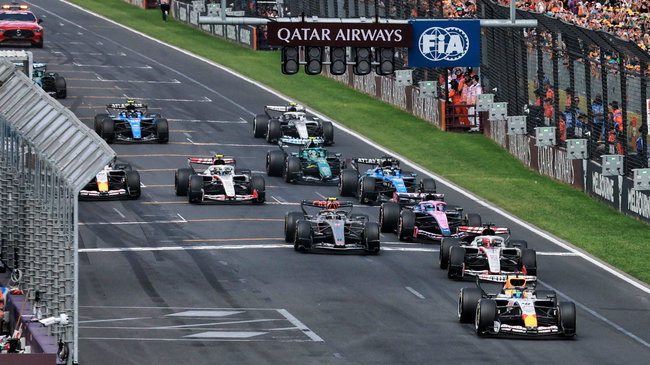
Chiefly, the start procedure still needs some refining after the terrifying miss for Franco Colapinto after Liam Lawson bogged down off the line.
Only lightning-quick reactions saved Colapinto from ramming at high speed into the back of Lawson’s slow-moving Racing Bulls machine, the consequence of which would have been extremely nasty.
It is all good and well doing practice starts in testing or at the end of the pit-lane, but for the first time in competition is a different beast. It is an area which is going to demand more fine-tuning before a serious accident takes place off the line.
After qualifying, the onboard footage of cars drastically slowing and losing over 50-60kph in speed heading into the fast sweeping Turns 9 and 10 was initially eye-catching. After all, a qualifying lap is the one time in the weekend where maximum power is met with low fuel and the highest risk from a driver.
The sight of drivers coasting through this iconic section of track was troubling as they super clipped along the long straight into the corner, some even downshifting. But it is not as troubling as drivers not running in qualifying whatsoever.
Take one of the previous eras which has been banded about as being superior, the 2013 regulations. At that year’s Chinese GP, Sebastian Vettel and Romain Grosjean didn’t even set a Q3 lap to preserve their tyres for the race, whilst Jenson Button completed a ‘token’ lap of over two minutes to start ahead in eighth.
Surely it is better to see a car out there in Q3, super clipping or not than staying in the garage at this critical moment of the weekend?
Furthermore, the nostalgia for the 2020-spec cars is largely driven by those clips of Hamilton roaring around Silverstone, Spa, and the rollercoaster of Mugello in qualifying. Yes, the car looks fantastic and its change of direction is visually breathtaking to watch, but those cars were terrible for racing, with the complexity of the bargeboards funnelling air downstream to the diffuser all but making it impossible for one car to follow another closely as the dirty air ruined the delicate balancing act.
What about the monstrous V10 era, with Michael Schumacher’s 2003 Australian GP pole lap circulating on social media on Saturday night? Again, it is an assault on all the senses, but racing in that era was terrible. The only real overtaking would come during the fuel-stop sequences, with drivers more than content to sit behind and let a rival pit out of the way than go for a move and risk everything.
Of all the 24 tracks on the calendar, Albert Park was perhaps the worst circuit to start at, with its long straights leading into not heavy braking zones, meaning there was no ample opportunity to harvest the energy and charge the batteries. In other words, it was an energy-starved track.
Other tracks, such as Spa, Monza, and Jeddah, will be similar in nature, but others, such as Monaco, Zandvoort, Madrid, Canada, and Abu Dhabi, should be wildly different, with the heavy braking zones and slow speeds allowing for constant recharging of the battery.
The article continues below.
Those who shout the loudest
For drivers to be completely writing off the rule cycle based on one race at the worst circuit for the regulations smells of a knee-jerk reaction and sour grapes that it appears Mercedes and Ferrari have stolen an advantage.
Those shouting loudest, such as Norris and Verstappen are simply doing so because they’re not winning and are a decent step behind those who currently are.
Is it any surprise that Russell issued a plea to give the rules a chance or that Hamilton, who was fiercely critical of the rules in Bahrain, describing them as like “driving a GP2 (F2) car,” was effusive after his fourth place in Australia, declaring he “loved” the new rules and that the cars were “fun to drive"?
That is all that it boils down to when the chequered flag waves. The drivers with the fastest cars are happy and buoyant, whilst those who see their championship hopes already slipping away cry wolf. That’s how it’s been since 1950, and that’s how it will be in 2026 and 2050 and for as long as the F1 world championship exists.
As Mark Twain might have said, "the report of F1's death was an exaggeration," or to put it another way: 'The more things change, the more they stay the same'. That's Formula 1.
Also interesting:
Join RacingNews365's Ian Parkes, Sam Coop and Nick Golding, as they look back on the Australian GP and look ahead to China! The trio discuss the first taste of F1's new regulations, Max Verstappen's frustration but also Lewis Hamilton's striking positivity.
Rather watch this episode? Then click here!


Get the latest F1 news from RacingNews365 directly in your Google feed! Click on the link below and you’ll see your favourite F1 website appearing even more often. That way, you’ll never miss any news, analyses, interviews, or exclusives.
Follow RacingNews365 on GoogleMost read

In this article
Never miss a thing from the Formula 1 season! Add the 2026 F1 schedule to your calendar at the touch of a button. Subscribe below and put the dates and times of every race directly on your PC or smartphone, so you don't miss a second from the new season.
Download the F1 calendar Download the F1 calendar
A variant with just the race and qualifying is also available.
Click here to download it..






Join the conversation!