


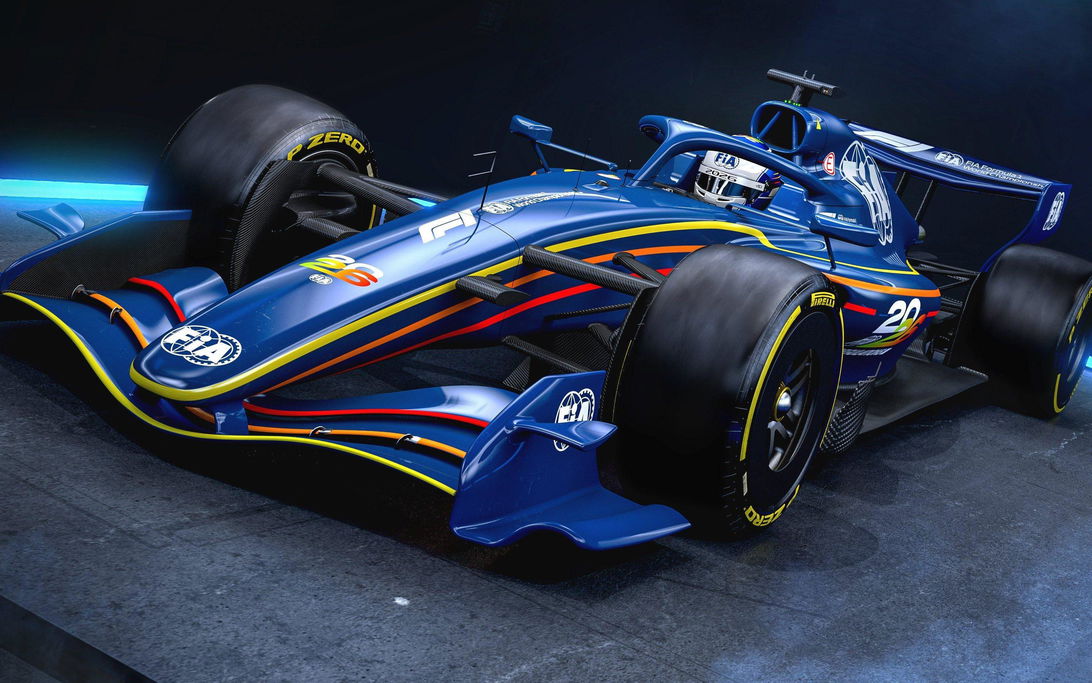
The biggest change concerns the powertrains, in which the electrical component will play a far more prominent role. Whereas now around 80 per cent of the power comes from the combustion engine, and 20 per cent from the battery, this season there will be a 50-50 split.
The combustion engine itself will provide less power - 400 kilowatts instead of the current 550-560 kilowatts, but this will be more than compensated for by the battery, which will rise from 120 kilowatts to as much as 350. Significantly, only renewable fuels will be used.
The most striking aspect is the disappearance of the MGU-H, the system that recovers energy from exhaust gases. This complex and costly technology will be omitted to simplify the powertrains.
The MGU-K will be the only way to recover energy, so it will become considerably more powerful, with 8.5 megajoules recoverable per lap instead of the current four, mainly during braking. This means that the drivers will have much more electrical power at their disposal during a stint.
Changes to chassis
The chassis is also undergoing major changes. The cars will be 30 kilograms lighter, with a minimum weight of 768 kilograms, and will become more compact. The wheelbase will be 200 millimetres shorter, to a maximum of 3,400 millimetres, while the width will decrease by 100 millimetres to 1,900 millimetres.
The most innovative aspect is the introduction of active aerodynamics, with dynamically adjustable angles of the front and rear wing elements in specific high-speed sections, designed for corner and straight modes. It will enable strategic adaptability and maximise full usage of the car’s power through greater on-track grip.
These active elements replace the current DRS system with the so-called overtake mode, and will be available for drivers within one second of a car in front to deploy extra power to instigate an overtake. It can be used all in one go or spread over one lap.
Climate neutral Formula 1
The new rules notably support F1's goal of being climate neutral by 2030. All cars will run on fully sustainable fuels, allowing fuel consumption to fall to just 70 kilograms per grand prix, compared to 100 kilograms since 2020.
The combination of these changes should make for more exciting racing and overtaking, in tandem with F1 drastically reducing its carbon footprint.
Most read





Never miss a thing from the Formula 1 season! Add the 2026 F1 schedule to your calendar at the touch of a button. Subscribe below and put the dates and times of every race directly on your PC or smartphone, so you don't miss a second from the new season.
Download the F1 calendar Download the F1 calendar
A variant with just the race and qualifying is also available.
Click here to download it..







Join the conversation!