


With a major regulation change coming to F1 this year, there's no way to predict who will commence the season in the strongest fashion.
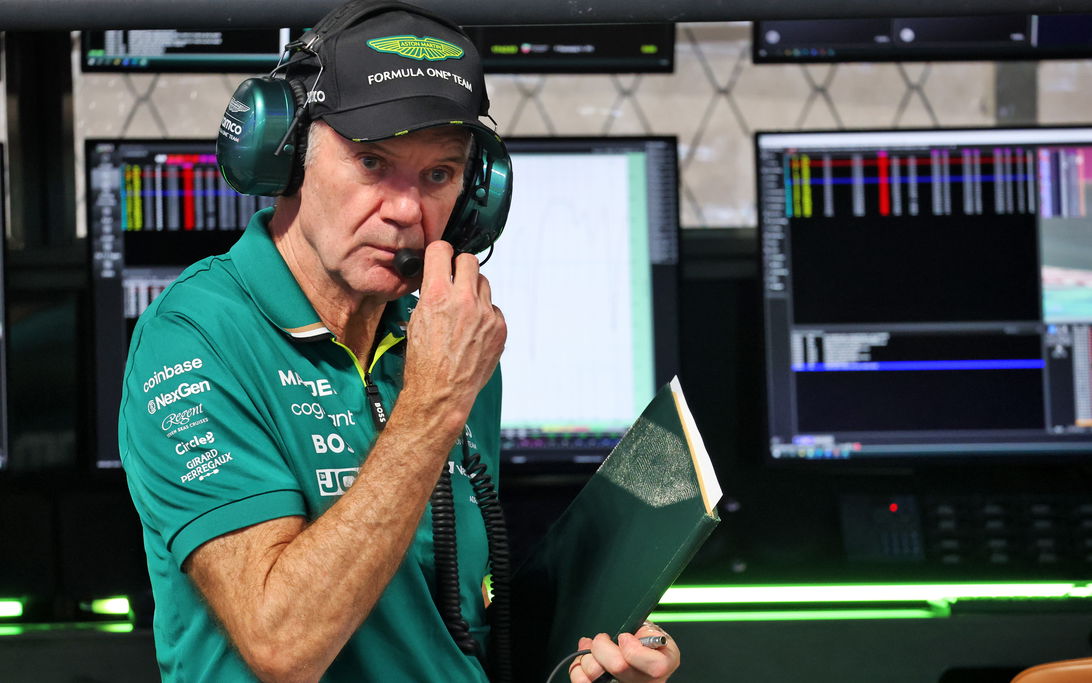
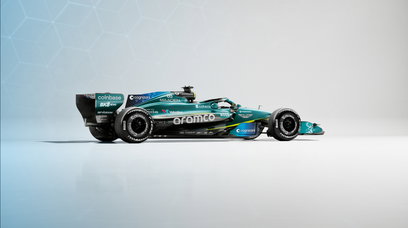
However, one of the more highly anticipated teams this year is undoubtedly Aston Martin. The new car has been designed predominantly by technical mastermind Adrian Newey, while Honda has returned to F1 as its power unit supplier.
Newey joined the team last spring from Red Bull and has since been appointed to the position of team principal. His ability to uncover tricks at the start of a new regulation cycle has always been one of his trademarks.
By nature, he drives concepts to extremes to unlock more performance.
However, RacingNews365 understands that Aston Martin faced a number of obstacles during development, forcing the team to rethink its concept.
Newey found that neither the wind tunnel nor computer simulations provided reliable data.
Therefore, over the summer, he demanded that the wind tunnel be recalibrated and that the specific simulation software be rewritten.
This had consequences for the team. The design timeline was adjusted, although this would not have resulted in a substantial delay.
However, some weaknesses also emerged from the new simulations with reliable computational tools.
This led to the implementation of changes under Newey's supervision, resulting in the final approval of several parts of the new car later than originally planned.
Viewed by others:

The development direction at Aston Martin
The team finds itself in a state of continuous development, as demonstrated by the rearrangements at the management level at the end of 2025, which saw Newey rise to the role of team boss.
However, these signals do not need to be considered alarming. It is typical of Newey to finalise the car only at the last minute, after identifying in great detail the evolutions of the individual areas that will be introduced during the season.
The new AMR26 will be a driving laboratory during the upcoming year, more so than other teams.
Despite the constraints of the budget ceiling, the development plan seems to be built around predetermined and clearly distinctive objectives.
On the other hand, certain updates will focus on optimising internal aerodynamics and power unit layout.
This is particularly the case in the early design stages - not only to increase reliability, but also as a further, far-reaching development of the concept of the car.
Newey did this in the past, for example, with the introduction of KERS, with a bold integration of the components.
The close collaboration between Aston Martin and Honda forms the basis for the designs Newey has pursued. In contrast, other developments will be focused exclusively on increasing aerodynamic performance.
In practice, these two interventions will merge into what Newey has always seen as a technical advantage that cannot be easily copied by rivals during a season. The car will take a final shape by the summer break, providing a solid foundation for the 2027 challenger.
For now, Aston Martin is still an open construction site focused on solid foundations for success. That may not be possible this year, but it forms a path that leads to bigger goals in 2027.
Also interesting:
The 2026 F1 Cars Revealed: Everything You Need to Know!
Discover how the 2026 F1 regulations will revolutionise the sport, with a shift to movable wings instead of traditional DRS, to the increased electrical power in the hybrid systems, and the introduction of 100% sustainable fuel.
Most read




In this article
Never miss a thing from the Formula 1 season! Add the 2026 F1 schedule to your calendar at the touch of a button. Subscribe below and put the dates and times of every race directly on your PC or smartphone, so you don't miss a second from the new season.
Download the F1 calendar Download the F1 calendar
A variant with just the race and qualifying is also available.
Click here to download it..





Join the conversation!