


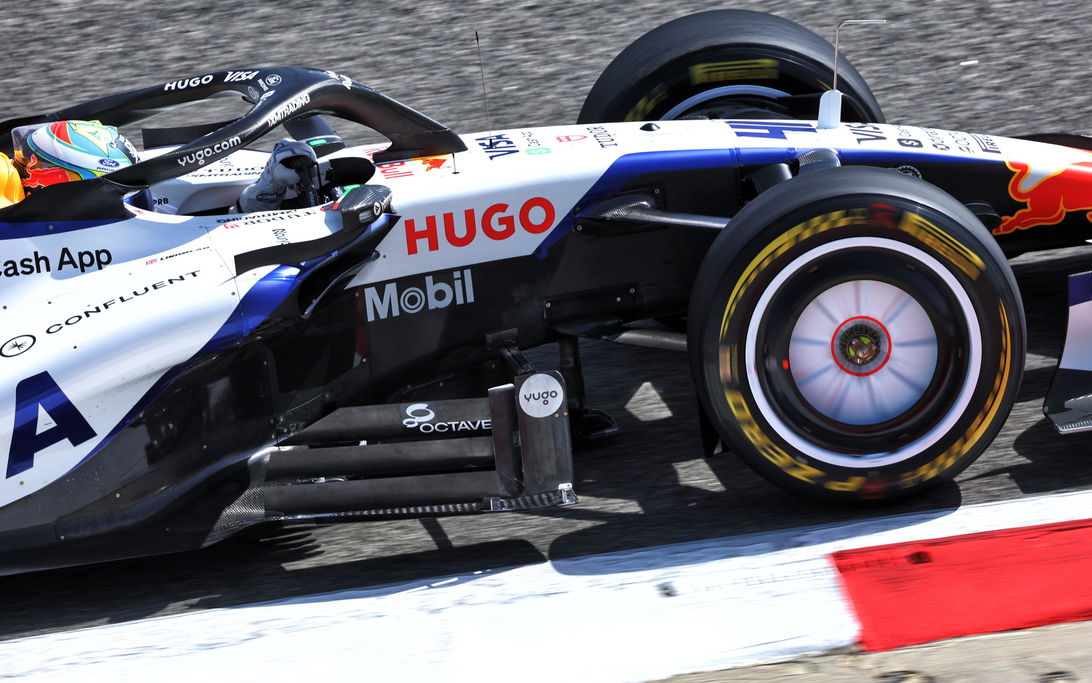
From 2022 until last season, F1 used standardised 18-inch rims supplied to all teams by BBS.
With new regulations for this year, teams have regained their design freedom and have again developed their own rims. Some have opted to manufacture their own, although most have them made by external manufacturers based on their own designs.
The goal of standardisation in 2022 was to improve aerodynamic efficiency: the uniform rim allowed for cleaner airflow around the wheels, and it was hoped that minimising aerodynamic distortions would contribute to closer and more exciting racing.
Now that the rims fall under the Open Source Components (OSC) category, teams can again be creative in this area and integrate the component into their aerodynamic concept.
Although the biggest topic in F1 at the moment concerns the compression ratios of the internal combustion engine, teams are constantly monitoring their rivals in other areas as well.
It is not inconceivable that the rivalry will soon extend into the realm of rims and brake ducts, especially since this area can be crucial for tyre management.
That this is a sensitive and potentially highly valuable area of development has been highlighted during background discussions with several technical leaders.
Old F1 laws no longer apply
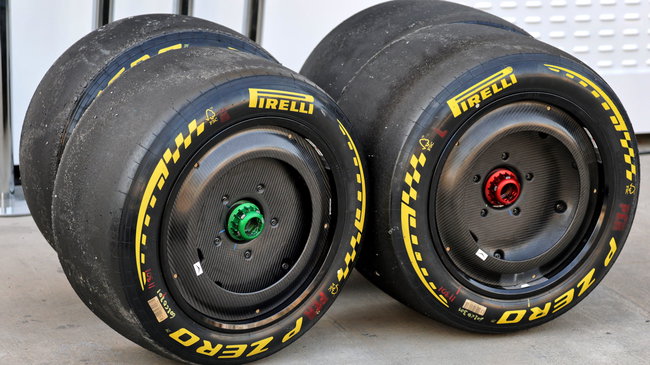
Pirelli Motorsport director Mario Isola, after the first week of testing in Bahrain, pointed out the importance of team-designed rims.
"There are no more standard rims," said Isola, speaking to the media, including RacingNews365. "We know from the past that the rims are a very important element in transferring heat into the tyre or not.
"We know most of the teams were expecting a delta between starting and running of two psi. That is the historical information we have from previous years. I can tell you that this number is no longer valid.
"We are going to release a new preview [for this week's test]. We will keep the same starting pressure, but we know that the delta between starting and running will be lower. At the moment, we are estimating only one psi, but I would not be surprised if it's less than this.
"So the teams are already working on rims and heat transfer to be able to define the temperature of the air in the tyre. That's really important for performance, of course. We know that.
"But if, in the future, you find a starting pressure that is higher than expected, you will have to look at the delta between starting and running, because probably this delta is going to be less and less according to what the teams find to keep the tyres cold, when they need to keep the tyres cold, of course.
"Because at a certain point, if you don't have the temperature in the tyre, you don't have the performance. The temperature is too low, so there is a threshold, and you cannot go lower than that.
"But at circuits like Bahrain, which put some energy into the tyre and the weather conditions are quite warm, I expect that they will play around the rims to define the temperature of the air."
Formulated guidelines
According to Isola, the teams also experimented with extreme solutions before the era of standard rims, so we can likely expect the same in the future.
Isola said: "I can tell you that years ago, we had some teams with very creative ideas on the rims.
"The problem was that we were unable to fit the tyre on the rim, and so we gave them some guidelines that translated into an FIA document. That was last year, before they started to design the rims, to be sure we can fit the rims. The rest is up to them.
"So if they want to use some ideas to modify the rim to achieve a certain result, they can do that.”
Additional aerodynamic effect
The effect of in-house developed rims does not stop at just managing tyre pressure.
The outward deflection of hot air from the rims allows for different management of airflow from the bodywork and sides of the floor.
This is very useful in these types of cars, which again have a rake setup like before the ground-effect era.
Also interesting:
Join RacingNews365’s Ian Parkes, Sam Coop and Nick Golding as they look back on last week’s first test in Bahrain and this week’s second test at the same venue. The trio debate Max Verstappen’s criticism of the regulations and whether Formula 1 is facing an identity crisis.
Rather watch the podcast? Then click here!


Most read
Never miss a thing from the Formula 1 season! Add the 2026 F1 schedule to your calendar at the touch of a button. Subscribe below and put the dates and times of every race directly on your PC or smartphone, so you don't miss a second from the new season.
Download the F1 calendar Download the F1 calendar
A variant with just the race and qualifying is also available.
Click here to download it..





Join the conversation!