


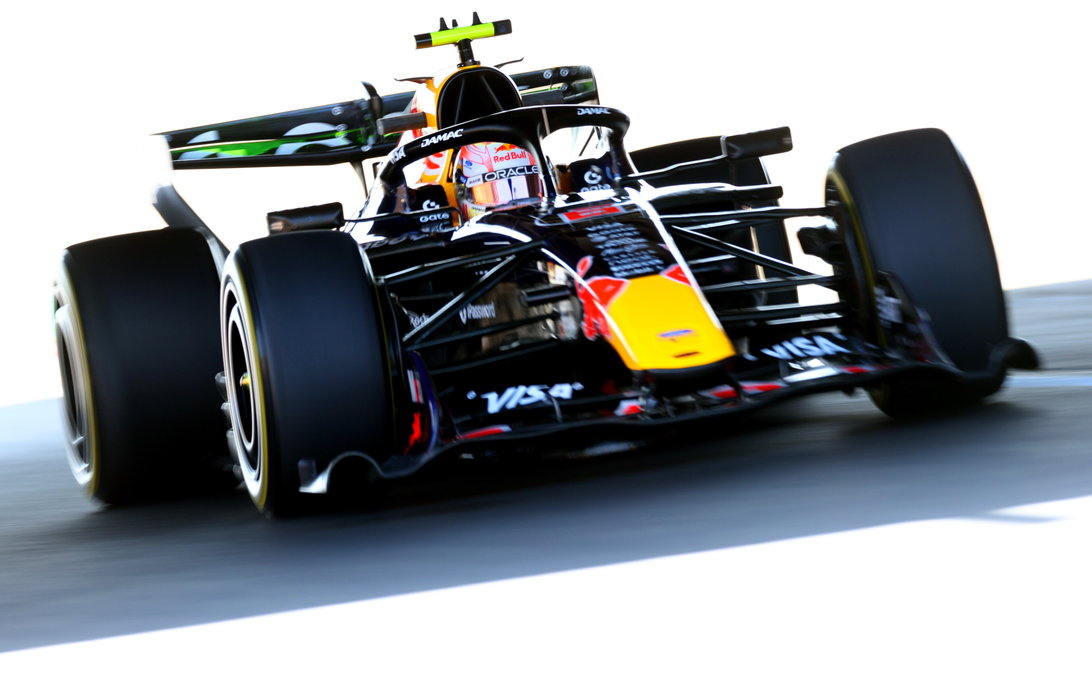
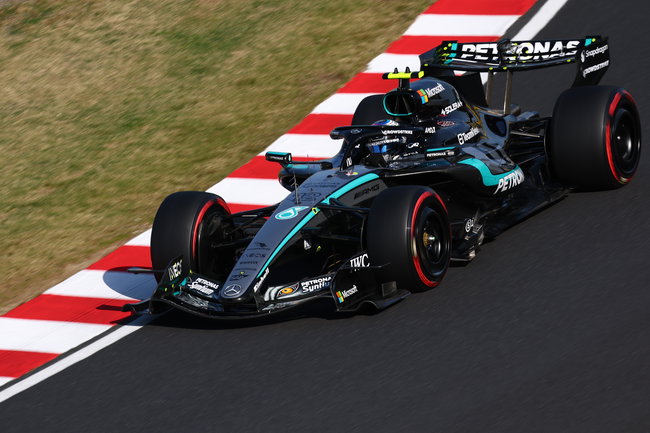
The FIA has banned a tactic used by Mercedes and Red Bull in qualifying to utilise the maximum power output from the MGU-K on the final straight during a flying lap.
As is well known, the regulations stipulate that the supply of electrical energy on the straight must be progressively reduced, with power decreasing linearly by 50 kW per second. To circumvent this linear reduction mandated by the regulations and exploit the maximum available electrical power on the final straight, Mercedes and Red Bull had in fact adopted a strategy in Australia and Japan (but not in China due to the shorter length of the finish straight) involving a specific emergency shutdown mode for the MGU-K.
Specifically, the regulations allow the driver to completely shut down the MGU-K in the event that a malfunction could jeopardise the power unit. Activating this mode, under the regulations, was the only circumstance in which the linear reduction of electric power on the straight could be bypassed, as it constituted an emergency situation.
To prevent misuse, however, the FIA had stipulated that once the MGU-K’s total shutdown function was activated, it could not be reactivated until after a sixty-second interval. In practice, this left the power generated by the internal combustion engine as the only available source for one minute. This imposed condition was intended to deter teams from using the MGU-K shutdown trick during the race, but it proved to be completely irrelevant in qualifying.
Mercedes and Red Bull, in fact, by shutting down the MGU-K at the end of the qualifying lap, and thus having full electric power until the finish line, only experienced the total cut-off of electric power for one minute during the return lap; however, this occurred precisely when it was entirely irrelevant, as it was the deceleration lap to return to the pits.
It is therefore correct to argue that, although the regulation was in fact followed to the letter, a procedure was adopted that had been introduced by the FIA solely for the purpose of recovery in the event of a failure. Ergo, it seems equally legitimate to argue that the spirit of the rule was completely and voluntarily disregarded.
The FIA was made aware of Ferrari’s unhesitating use of this procedure; to be fair, Ferrari had noted that the low speed of Mercedes and Red Bull during their out-lap posed a safety hazard due to the significant difference in speed compared to the cars completing their qualifying laps.
The FIA, therefore, acted promptly on safety grounds, also in light of the incident involving Oliver Bearman and Franco Colapinto during the race. In terms of performance, it is important to note that the gain derived from this tactic was measurable in hundredths of a second, certainly not tenths.
Nevertheless, since these were qualifying laps, it is clear that even the slightest advantage can translate to a better grid position. There is no doubt that the management of available energy and charging modes is the central theme of this early season, so much so that all teams have focused particular attention on the continuous refinement of the algorithms that manage the PU’s electrical energy.
The article continues below.
Two months ago, Ferrari welcomed a specialist from Nissan’s Formula E team, who had previously worked with Mercedes HPP, into its ranks.
Maxime Martinez, a French national, holds the position of Power Unit Performance Engineer, and drawing on the experience he gained in Formula E, his specific role is to oversee the power unit’s control systems.
This role is certainly becoming crucial at this stage of the season, particularly in relation to the implementation (once confirmed) of the ADUOs, that is, the development opportunities that will become available after Monaco.
Ferrari is striving to minimise development time to equip the power unit starting from Barcelona, although the technical timelines for design, validation, and production suggest a possible effective launch date in July.
In Maranello, between the aerodynamic and software package ready for Miami, the evolution of the PU through the ADUOs, and a keen focus on rivals’ tactics, the aim is to close the gap with Mercedes, to compete on equal footing with the Brixworth team during the European phase of the season.
Also interesting:
Join RacingNews365's Nick Golding and Samuel Coop as they dissect the major story of Gianpiero Lambiase leaving Red Bull to join McLaren. The impact of Lambiase leaving is discussed and what it means for Max Verstappen, plus the FIA's April meetings are looked into.
Rather watch the podcast? Then click here!


Most read

In this article
Never miss a thing from the Formula 1 season! Add the 2026 F1 schedule to your calendar at the touch of a button. Subscribe below and put the dates and times of every race directly on your PC or smartphone, so you don't miss a second from the new season.
Download the F1 calendar Download the F1 calendar
A variant with just the race and qualifying is also available.
Click here to download it..





Join the conversation!