


In the winter of 1992, Ayrton Senna was restless. A three-time F11 world champion and the undisputed star of McLaren, yet increasingly frustrated by the direction of the series he loved.
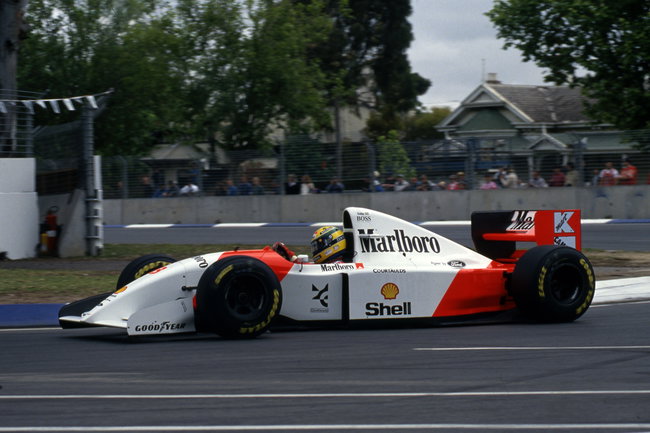
Williams had surged clear with Renault power and advanced active suspension, while McLaren — following Honda’s withdrawal — was left fighting with customer Ford engines.
What followed sent quiet but powerful shockwaves through the Formula 1 paddock.
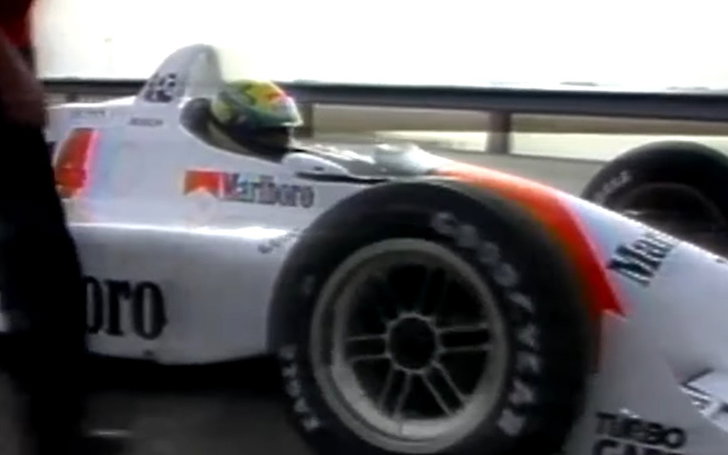
On a discreet December day at Firebird Raceway near Phoenix, Arizona, Senna climbed into a Penske PC21 IndyCar, far from the cameras and politics of Formula 1.
The test was arranged through his close friend and fellow Brazilian Emerson Fittipaldi, who had successfully reinvented himself as an IndyCar front-runner after leaving F1.
This was no casual experiment. For Senna, it was both a statement and a question: Could he still dominate in a completely different discipline — one stripped of electronic aids and political complexity?
Viewed by others:
Different machine, same Senna
The Chevrolet-powered PC21 was a world away from Senna’s McLaren MP4/7A. Heavier, more physical, and entirely devoid of driver aids such as traction control or active suspension, it relied purely on mechanical grip, bravery and finesse.
Senna approached the test methodically, studying braking points, throttle response and how the car behaved at the limit. But it did not take long.
Within a handful of laps, he was circulating at competitive speed. Then came the moment that left the Penske crew stunned: Senna went half a second quicker than Fittipaldi’s benchmark time, despite having never driven an IndyCar before.
Nigel Beresford, Penske’s head of engineering at the time, recalled the moment vividly: "He came back into the pits and said: 'Thank you very much, I’ve learned what I need to know.'
"Then he got out of the car, and that was it."
Roger Penske later confirmed that the implications of the test were clear — not just for IndyCar, but for F1 as well.
While the team would have welcomed Senna with open arms, Penske understood the broader picture.
"If Senna was available, we’d have tried to figure something out," Penske said. "But I think he was using us as maybe somewhat of an impact against the McLaren guys at that point to try and get his deal put together."
It was a shrewd observation — and an accurate one.
McLaren’s wake-up call and the road not taken
Word of the test reached Woking quickly. For McLaren, already dealing with Senna’s race-by-race contract negotiations, it was an unmistakable warning shot. Their talismanic driver had credible alternatives.
Senna’s flirtation with IndyCar was not driven by boredom with Formula 1, but by frustration.
The technical regulations favoured manufacturer-backed teams, and McLaren’s sudden loss of works status left him questioning whether he could continue fighting for championships.
For a brief moment, a future in American open-wheel racing felt possible. IndyCar was booming, Nigel Mansell was preparing his own switch for 1993, and Senna’s presence would have transformed the series globally.
Penske’s interest was genuine, and the Indianapolis 500 loomed as an irresistible challenge.
Yet Senna’s heart ultimately remained in Formula 1. The Phoenix test had served its purpose — applying pressure and proving his freedom of choice.
McLaren responded by strengthening its Ford relationship for 1993, and Senna stayed. That season would deliver some of the most iconic performances of his career, even if Williams remained out of reach.
Senna never drove an IndyCar again. That quiet test in the Arizona desert remains his sole experience of American open-wheel racing — a tantalising glimpse of what might have been.
Most read

In this article
Never miss a thing from the Formula 1 season! Add the 2026 F1 schedule to your calendar at the touch of a button. Subscribe below and put the dates and times of every race directly on your PC or smartphone, so you don't miss a second from the new season.
Download the F1 calendar Download the F1 calendar
A variant with just the race and qualifying is also available.
Click here to download it..





Join the conversation!