


As of the 2026 Italian Grand Prix, there have been 1,162 world championship F1 races, competed in by 782 drivers.
357 of those have scored a point, 116 have won at least one grand prix, just 35 of them have become world champion, and even fewer- perhaps only a handful have become true household names.
There have been iconic rivalries, iconic cars, and moments of sporting skill and brilliance akin equal to anything in any major sport, but what is the best single performance in a race from a driver?
Perhaps it might be Max Verstappen at the awfully wet 2024 Sao Paulo GP where, from 17th on the grid, he firmly put Lando Norris in his place and swatted away any lingering title hopes for the McLaren driver. Maybe, its Lewis Hamilton at the 2008 British Grand Prix, where in typically Silverstone conditions, he lapped the field up to third place and won by 66 seconds?
How about Michael Schumacher winning the 2000 Japanese GP to finally end the wait for Ferrari after 21 years of waiting for a championship? Then there's Jackie Stewart's virtuoso performance at the 1968 German GP at the Nurburgring, where in terrible conditions and with his wrist in a cast, he won at the track he would dub 'The Green Hell' by over four minutes.
But then what about Juan Manuel Fangio putting Peter Collins and Mike Hawthorn in his shadow with the storming victory at the 'ring in 1957, where a botched pit-stop cost the great Argentine buckets of time, but roaring past to capture his fifth and final world championship?
Incredible drives all, and they all rightly feature in the top 10 of the greatest drives in F1 history. They all share in common that they were race victories, something you might regard as a perquisite for the honour of 'greatest drive in F1 history.'
But you would be mistaken.
For the single greatest drive in F1 history did not result in a victory, nor even in a podium finish. It was a 'mere' fourth place, and it came, on this day, September 12th, 50 years ago, at the 1976 Italian Grand Prix at Monza.
The driver? Niki Lauda.

Lauda drive is the greatest in F1
The seeds for Lauda's performance at the 1976 Italian GP came just six weeks earlier after his famous crash at the Nurburgring in the German GP on August 1st.
That story is well-known. The reigning world champion was administered the last rites twice and suffered damage to his lungs due to the hot and toxic gases he inhaled after his helmet had been wrenched off in the impact. He even slipped into a coma.
He decided to limit the amount of reconstructive surgery, focusing mainly on his eyelids to restore their functionality.
The expectation was that Lauda would be out for the rest of the 1976 season at a minimum, and would return to mount a bid to reclaim his crown in 1977 after healing and recovering.
He missed the Austrian and Dutch Grands Prix, but stunningly, he announced he was returning for the Italian Grand Prix - just 42 days after he had cheated death.
Ferrari had been caught so on the hop by Lauda's Lazarus impression that it had to run three cars after Carlos Reutemann had been drafted in to partner Clay Regazzoni as the Austrian's temporary replacement.
Lauda qualified fifth for the race, with title rival James Hunt down in 27th on the 29 car grid, after his best time was disallowed for apparent 'fuel irregularities.' This meant that officially, the Briton had not qualified for the 26-car grid, but after the driver in 26th, Otto Stuppacher, had already left the track to head home, Hunt was allowed back in. The allegations of fuel irregularities were later withdrawn.
In the race, Ronnie Peterson won for March, with Regazzoni second, and Jacques Laffite third for Ligier ahead of Lauda in an unremarkable and quiet fourth place.
After the race, in which he later admitted he was "petrified", Lauda removed his helmet to reveal the blood-soaked balaclava which had stuck to his still raw and weeping wounds.
It was the ultimate performance, testing the bounds of human endurance as far as they could possibly go, all in the name of the pursuit of a few world championship points.
His wounds were still so raw that, if this had happened today, the decision would have been taken out of Lauda's hands by the medical advice. He was, in any era, in any medical advice, decidedly unfit to return to the cockpit of a racing car just six weeks after nearly paying the ultimate sacrifice.
Lauda's act of pure defiance in racing at Monza that day stands as the greatest act of bravery in sporting history. Not just motorsport, but in any sport by any athlete, male or female, successful or not.
It stands alone, and is unlikely ever to be beaten. It is hard to imagine in which circumstances an athlete could ever be allowed to compete in such a physical condition as Lauda was in that day. Modern medicine would simply not permit it.

Also interesting:
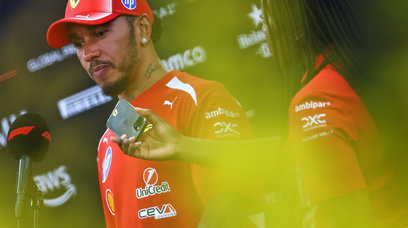
Join RacingNews365's Ian Parkes, Samuel Coop and Nick Golding as they look back on the Italian GP and look ahead to Madrid! Kimi Antonelli's incredible win is a main discussion, as is Lewis Hamilton's frustration with Ferrari.
Rather watch the episode? Click here!


Most read


In this article
Never miss a thing from the Formula 1 season! Add the 2026 F1 schedule to your calendar at the touch of a button. Subscribe below and put the dates and times of every race directly on your PC or smartphone, so you don't miss a second from the new season.
Download the F1 calendar Download the F1 calendar
A variant with just the race and qualifying is also available.
Click here to download it..

Join the conversation!