


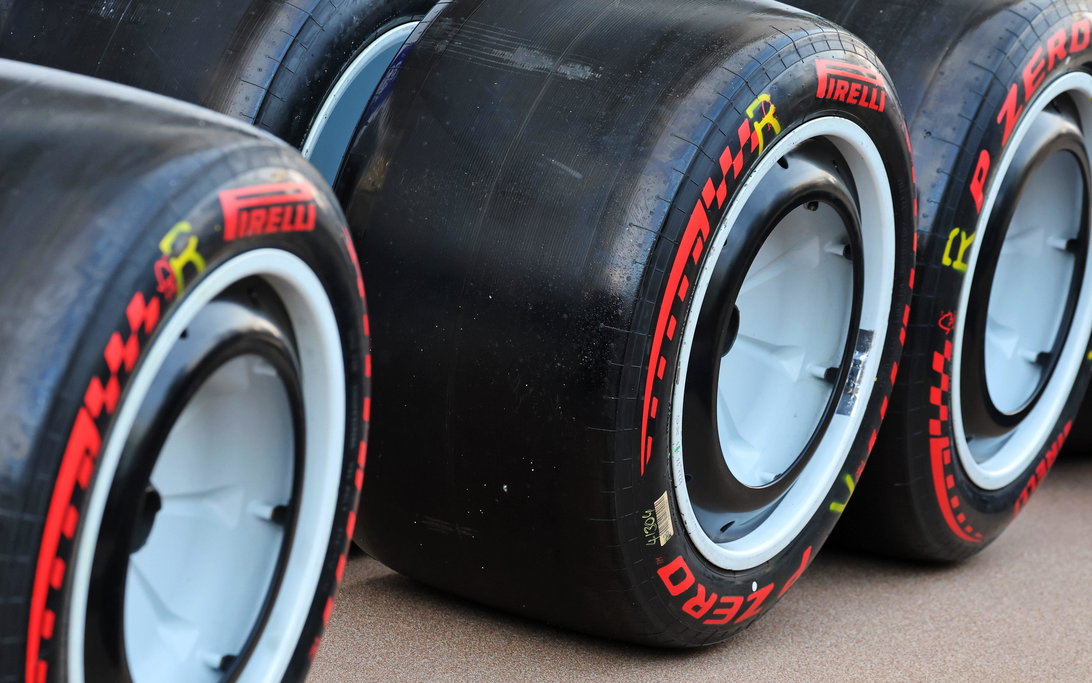
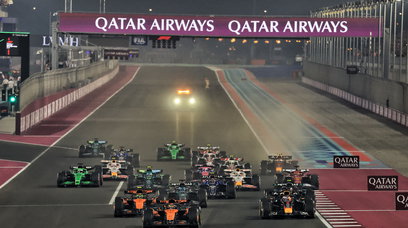
Pirelli is weighing up emergency changes ahead of the Qatar Grand Prix after Friday practice at Lusail International Circuit exposed tyre wear levels far beyond pre-event expectations.
The round in Qatar is considered the toughest of the F1 season on tyres, but the opening running has shown graining and degradation hitting levels that caught even Pirelli off guard.
The Italian manufacturer believes a more worn track surface, combined with the reduced downforce of the 2026 cars, is generating extra sliding and accelerating the damage.
Teams are working under a maximum stint length of 27 laps this weekend — therefore requiring at least two pit stops — with front tyre pressures set at 29psi, the highest starting point of the season and matching the level Pirelli settled on for Saturday running at the same event last year.
But Friday already produced a troubling data point: the most heavily-used front-left tyres showed localised areas of 100 per cent wear after just 15 laps, 12 short of the mandated maximum for the 57-lap grand prix.
Speaking to media, including RacingNews365, Pirelli's chief engineer Simone Berra admitted the Qatar circuit continues to throw up problems nobody saw coming.
"The graining level and the wear level are higher than what we expected pre-event, so it's quite impressive the surprises that this circuit gives to us every time we come here," he said.
"What we have noticed is that in the high fuel running, the graining is on in all three compounds: C3, C2, and C1 as well.
"The C1 [the hardest in Pirelli's range] is slightly more resilient in terms of mechanical resistance, and so the graining level is slightly reduced.
"While on C2 and C3, the graining level is moderate to heavy and is accelerating the wear mainly in two regions: towards the inside shoulder of the tyre, and then on the very outside shoulder of the tyre.
"So we have two points of high wear, and we have seen cases of 100 per cent wear already during the high-fuel run after 15 laps."
[Article continues below]
Tyre pressure increases, stint length changes — or both?
The extreme levels of graining seen are predominantly affecting the front tyres, and Berra expects teams to do work to "protect the front axle", which is the most stressed in Lusail, with the front-left tyre the most vulnerable.
The knock-on effect is a level of thermal degradation Pirelli has not previously recorded at this circuit, costing drivers as much as two-tenths of a second per lap and threatening to upend the long, flat-out stints teams have relied on in the past, with maximum stint lengths having also been prescribed in past seasons.
Adding to the graining and thermal decay concerns, Pirelli found evidence of gravel cuts in tyres returned after Friday's sessions.
"We have noticed some gravel cuts, Berra said. "We've seen multiple drivers going off the track and bringing a lot of gravel into the race line.
"We have seen some of them quite deep into the construction. There was also a red flag due to this, and it's something that, obviously, on a circuit like this, is an additional variable that can create some attention from our side in terms of punctures."
Similar gravel damage last year prompted Pirelli to raise pressures before Saturday practice, and the Italian manufacturer has not ruled out doing the same again this time round, potentially as high as 30psi.
"We are evaluating all the variables," Berra said. "If necessary, we will increase the pressure."
A further rise would push front pressures beyond anything seen in the modern era of Formula 1, and Berra is wary of the trade-off it would bring, since a reduced contact patch risks making graining worse rather than better.
"That's why I wouldn't increase the pressure if possible," he said. "But if we have to for integrity reasons, obviously we are going to evaluate it."
Pirelli is also considering trimming the 27-lap maximum stint length, with the Friday tyres now being sectioned and analysed in the manufacturer's laboratory to check for integrity concerns.
"We are going to check them, to section them, and obviously if there is no integrity issue, we will keep the 27 laps in any case, because we know that graining level will reduce for the race, and the teams will do much more management to extend the stint length," Berra said.
"But it's an analysis that is ongoing in our laboratory and, with our usual prescription review, we are going to understand if we continue with 27 or not."
Even if the maximum stint length survives the review, Pirelli's own modelling suggests teams would gain little from running tyres that far given the pace drop-off involved.
Over the 57-lap race distance, splitting the race into three even stints of 19 laps looks the more logical route, though a well-timed safety car could still tempt a team into stretching a set to the full 27 laps.
However, in that circumstance, Berra expects the degradation levels seen on Friday to push most strategies toward three stops, particularly if the safety car appears early in the race.
Most read
In this article
Never miss a thing from the Formula 1 season! Add the 2026 F1 schedule to your calendar at the touch of a button. Subscribe below and put the dates and times of every race directly on your PC or smartphone, so you don't miss a second from the new season.
Download the F1 calendar Download the F1 calendar
A variant with just the race and qualifying is also available.
Click here to download it..



Join the conversation!