


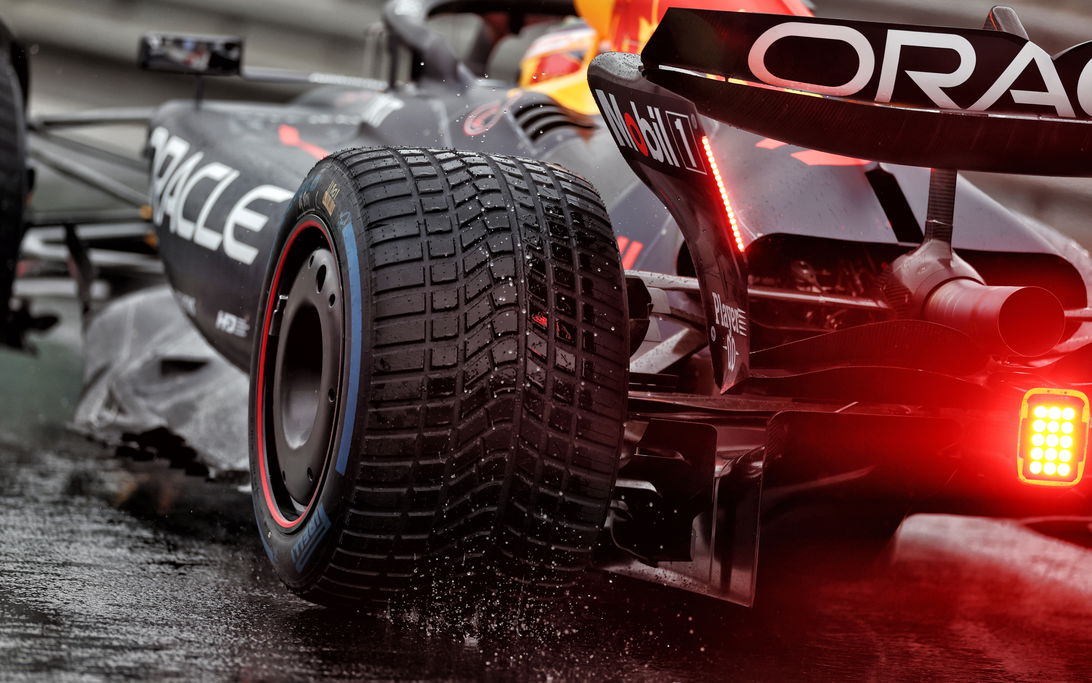
Pirelli head of motorsport Mario Isola has shared plans for a wet test in Bahrain before the start of the F1 season.
Wet-weather running has been a consistent issue across different generations of F1 cars in recent years, and considerable work has gone into finding a solution.
In the previous two eras, the spray kicked up from the cars has caused dangerously low levels of visibility in wet conditions, to the extent that full-wet tyres are almost surplus to requirements.
Such was the level of spray at the 2021 Belgian Grand Prix, the race was less than a handful of laps — all behind the safety car — before being called off with half points awarded.
Whilst F1 and the FIA have taken steps to avoid a repeat of that farcical situation, there is still a lot that needs to be established and done in coordination with the championship's sole tyre supplier.
Speaking to media, including RacingNews365, at the Bahrain International Circuit — where F1 is conducting its two official pre-season tests ahead of the new campaign — Isola addressed how the new-for-2026 cars could make wet-weather races more viable.
"Considering the cars are different, without the diffuser — that was putting a lot of spray in the air — the visibility is probably slightly better," he said.
"Also, the tyres are a little bit narrower, so putting less water in the air. Whether it is enough for the race director to let them run or not, this is something I don't know.
"What we tried to achieve is to reduce the crossover time between the wet and intermediate [compounds] in order to make the wet tyre more usable.
"The point is that, if you are in a race condition and the expectation is for the track to dry, they [the teams] will put on intermediates, because they want to minimise the number of pit stops. So, it depends on the conditions."
Viewed by others:
Development headache
However, the lack of testing opportunities in adverse conditions is a development headache for Pirelli.
"Any information is important for us, because we don't have a lot of opportunities for testing," Isola explained.
"At the moment, we are planning three sessions — it's a miracle, I tell you — because if you look at the test in dry conditions, we can use Tuesday and Wednesday after a race; teams are already at the track.
"If it is not a back-to-back or a street circuit, we can ask them to stay at the track and test the tyre.
"So we have the opportunity, for example, to organise a test in Japan or in other circuits where we can stay a couple of days more — and we are thankful to the teams, because they are also running 24 races, and the guys have to stay more for our test, as well as the drivers — so it's not easy.
"But for wet condition you cannot; you need a specific track. We go to Paul Ricard, we go to Magny Cours."
Bahrain wet weather plans
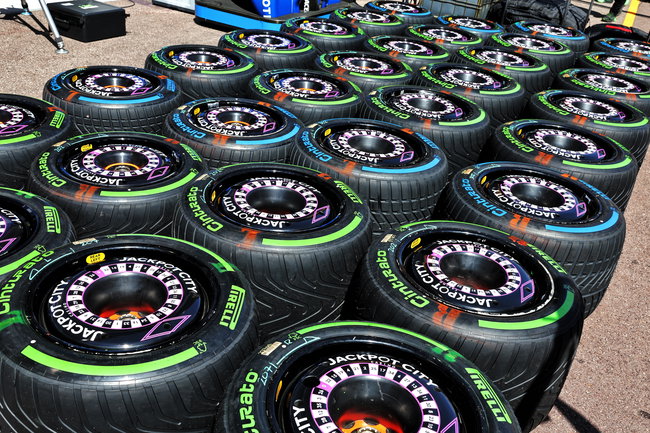
Isola revealed there are plans in the works to hold a wet test in Sakhir. Despite the track being located in the desert, the circuit has a "fantastic idea with sprinklers and some other devices" to wet the tarmac, according to the Italian.
"We are trying to organise a wet condition [test] here in Bahrain, and I'm very confident because the track has an idea of how to wet all the circuit — so the full circuit, not with the tanks, but with another system," he explained.
"And if they do that properly, we have an opportunity to test on a high-severity circuit in wet conditions. That this is something that doesn't happen very often. So we have this opportunity, we want to use it in the best possible way."
That test would be conducted late in the evening to ensure more stable conditions and is currently slated to be run across the 28th February and 1st March (the weekend before the season starts in Melbourne) with McLaren and Mercedes taking part.
Isola highlighted the potential to develop a third wet-weather option, a single-thread super intermediate tyre to bridge the gap between the two current compounds, but underlined how the lack of testing opportunities makes it difficult to know how to direct resources.
"We have another couple of tests planned in Fiorano, and I don't remember if it was Paul Ricard or Magny Cours, but in one of the two circuits," he said. "But that's all, more than that is almost impossible, so we have to maximise any opportunity for wet development...
"I'm not saying that I hope it's raining in one of the first races, but it could be interesting for us to get information from a wet race, to understand a bit more about that, and then to direct our development in the right direction."
Also interesting:
In this video, we explore a fascinating Mercedes engine theory that is engulfing the F1 paddock. We break down how it works, why it matters, and why this advantage — if real — may be brilliant, legal… but only temporary.
Most read


Never miss a thing from the Formula 1 season! Add the 2026 F1 schedule to your calendar at the touch of a button. Subscribe below and put the dates and times of every race directly on your PC or smartphone, so you don't miss a second from the new season.
Download the F1 calendar Download the F1 calendar
A variant with just the race and qualifying is also available.
Click here to download it..





Join the conversation!