


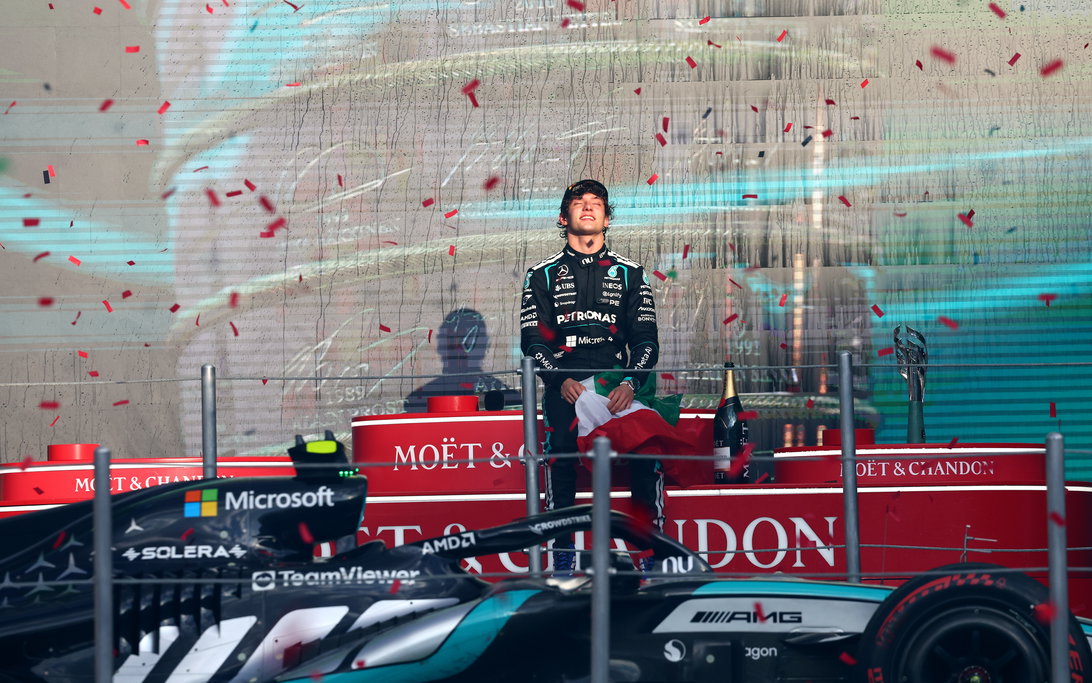
Kimi Antonelli has explained how he mastered F1's new uber-complex power units as he swept to his first drivers' title in 2026.
For 2026, as well as sweeping chassis changes, the turbo hybrid engines underwent their biggest change since their adoption in 2014, with the MGU-H removed and the power output split roughly 50:50 between the Internal Combustion Engine and beefed-up electrical systems, with batteries capable of producing 350kw of power.
This 50:50 split was a drastic change from 2025, where the split had been around 80:20 in favour of the ICE, with the much greater reliance on battery power creating 'superclipping' where cars slowed on straights to recover energy.
World champions Max Verstappen and Fernando Alonso delivered scathing reviews early on, with Verstappen claiming that the rules were "anti-racing" and like "Formula E on steroids" whilst Alonso declared that fast corners had become "charging stations".
Changes were made ahead of the Miami Grand Prix, with deeper ones coming in for 2027, where the split will be moved to strengthen ICE reliance by increasing fuel flow.
Antonelli's team-mate George Russell has struggled badly to adapt to the new ways of driving in particular, with drivers now required not to demand full power on corner exit as it spends electrical energy early on straights, meaning they lose out.
Antonelli mastered the new rules to record nine grand prix wins to Russell's three as of the Sao Paulo GP, clinching the title in Mexico City to become F1's youngest champion at 20 years, 2 months, 7 days and beat Sebastian Vettel's record from 2010 by 3 years, 2 months, 4 days.
Detailing his approach to driving style, Antonelli has explained how he changed his approach depending on what the car was telling him.
"I had to adapt because this car was a lot different than last year, so I had to change the way I was approaching [driving]," Antonelli told media, including RacingNews365.
"At some tracks, you could drive fully normal, and at others, you maybe had to think more, but during pre-season, I tried to drive as naturally as possible and then see how the power unit would react and then adapt from that point on.
"It was not easy for me because it was such a big change, and still at some tracks it is a bit painful to drive because you want to do something different, but it can compromise you a little bit.
"On my side, I just tried to adapt as much as possible and drive as naturally as possible, and then see how things would unfold."
[Article continues below]
Hopeful for 2027
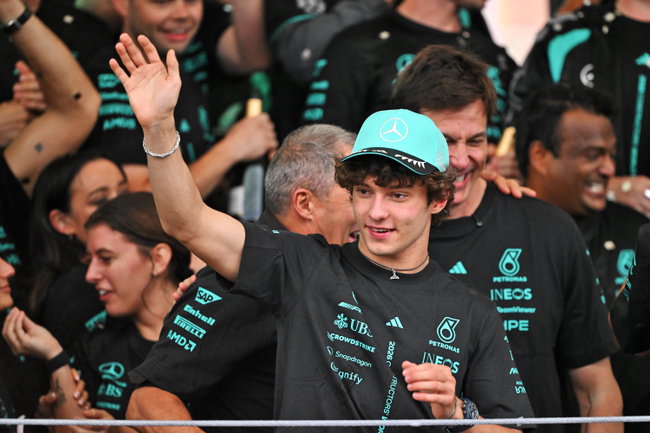
With the changes coming for 2027 to increase ICE reliance, and further changes in that direction for 2028, Antonelli was hopeful that the driving challenge would become easier as time progresses.
"It's been a massive change for everyone, and it hasn't been easy to adapt to it," he said.
"But I think next year should be better on this side with less electrical power and more combustion, so it should be a bit easier for all of us."
Also interesting:
Join RacingNews365's Ian Parkes, Samuel Coop and Nick Golding as they look back on the São Paulo Grand Prix in Brazil! Max Verstappen’s simply staggering recovery from 21st on the grid is a key talking point, as is Ferrari’s current power unit struggles.
Rather watch the podcast? Then click here!


Most read


In this article
Never miss a thing from the Formula 1 season! Add the 2026 F1 schedule to your calendar at the touch of a button. Subscribe below and put the dates and times of every race directly on your PC or smartphone, so you don't miss a second from the new season.
Download the F1 calendar Download the F1 calendar
A variant with just the race and qualifying is also available.
Click here to download it..


Join the conversation!