


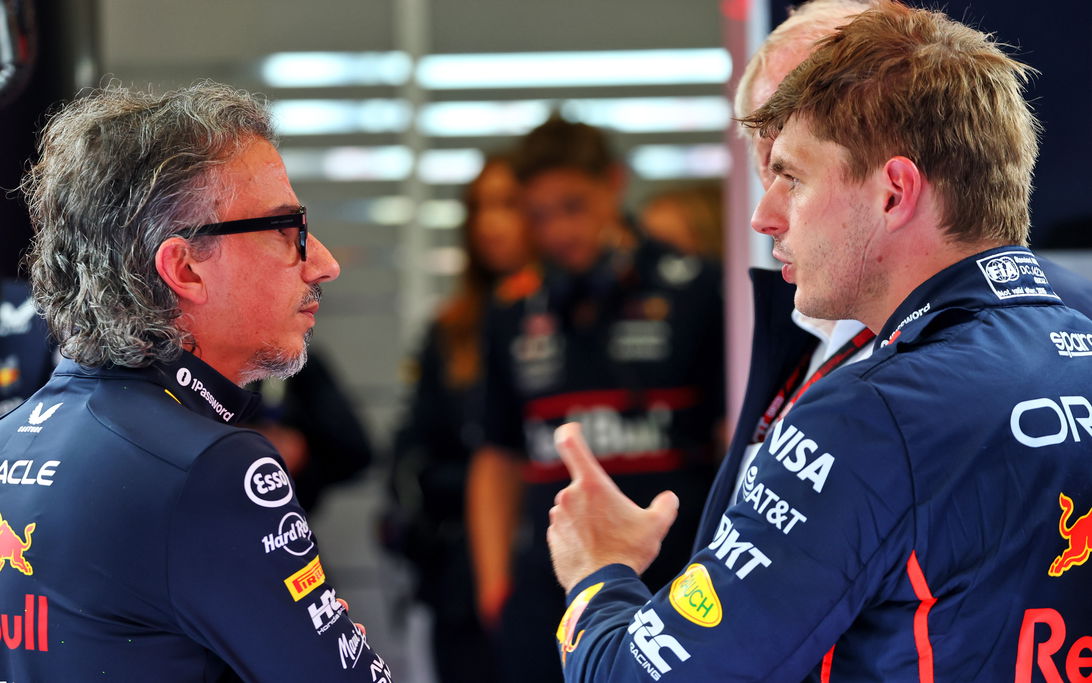
We rewind to the start of 2025. Max Verstappen begins the new F1 season as defending champion, and things within Red Bull appear calmer.
The power struggle between Christian Horner and Helmut Marko has largely faded into the background, leaving only one objective: to secure a fifth consecutive world title.
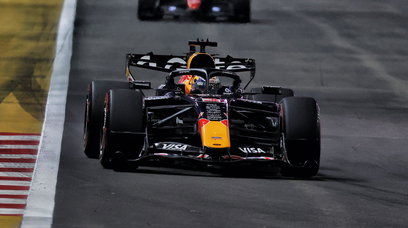
However, during the winter testing, it quickly becomes apparent that this will be no easy task. Verstappen's new RB21 carries over many of the same issues from 2024, while McLaren has produced a formidable car.
Verstappen may claim victories in Japan and Imola, but by the summer, the world title starts to slip out of reach. Lando Norris and Oscar Piastri are simply too quick.
One of the enduring problems lies in the correlation between Red Bull’s ageing wind tunnel and performance on track.
Verstappen and his engineers are forced to make frequent adjustments throughout the weekend, when ideally they would be competitive from the first free practice session.
While Verstappen can still conjure magical qualifying laps with an extreme setup, he often plays a secondary role in the races themselves. Red Bull struggles to find the elusive "sweet spot" that McLaren seems to excel at.
Viewed by others:

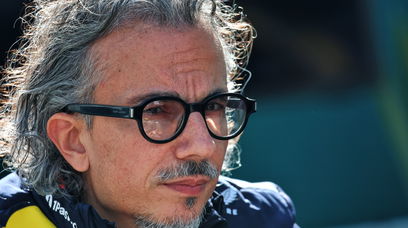
Verstappen's pivotal Red Bull role
The result was a dramatic shake-up at Red Bull, with Christian Horner suddenly dismissed and Laurent Mekies appointed as his replacement. Horner was held accountable for the team’s lacklustre results, and Mekies wasted no time in changing tack.
It quickly became clear that the technically astute Frenchman intended to place driver feedback at the heart of development, rather than relying primarily on simulator and wind tunnel data.
Mekies immediately elevated Verstappen to a leading role. At Monza, for example, Red Bull introduced a floor update, and despite concerns from technical director Pierre Wache, Verstappen was given the freedom to run an extreme setup.
The gamble paid off: he claimed a convincing victory and sparked a remarkable championship comeback, ultimately finishing just two points shy of denying Norris the title.
More importantly, Verstappen was afforded greater influence within the team. Mekies recognised that certain processes were flawed and saw 2025 as an opportunity to refine them.
With Red Bull performing more consistently under the revamped approach, the team is better positioned to tackle the 2026 regulation changes.
Red Bull still needs to build a competitive car, but the team now understand how to extract maximum performance more efficiently. Feedback from Verstappen – and Isack Hadjar – will be crucial in developing a stable base, while allowing rapid setup adjustments where necessary.
Despite the leadership changes, it wasn’t smooth sailing throughout the second half of 2025, but Verstappen and Yuki Tsunoda were more willing to push the car to its limits in free practice.
This allowed the team to react and implement changes sooner, yielding tangible improvements. In this way, Red Bull underwent a transformation that should benefit them in 2026, with Verstappen playing a pivotal role.
Also interesting:
Join RacingNews365's Ian Parkes, Sam Coop and Nick Golding in the final episode of the year, as Ian and Sam battle it out again in the RacingNews365 Big Fat F1 Quiz of the Year! Join in the fun by yourself or with other people to test your 2025 F1 knowledge!
Rather watch the podcast? Then click here!


Most read
In this article
Never miss a thing from the Formula 1 season! Add the 2026 F1 schedule to your calendar at the touch of a button. Subscribe below and put the dates and times of every race directly on your PC or smartphone, so you don't miss a second from the new season.
Download the F1 calendar Download the F1 calendar
A variant with just the race and qualifying is also available.
Click here to download it..





Join the conversation!