


Haas team principal Ayao Komatsu believes "two elements" will contribute to what he feels will be "a huge variation" between the F1 teams as they fight to get to grips with the new regulations for this season.
As the days count down towards the start of the new season in Australia in early March, the teams are at present unveiling their cars, albeit predominantly liveries only, as they keep their cards close to their chests regarding the aerodynamics.
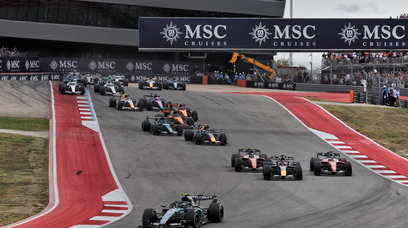
In tandem with the introduction of a new power unit, comprising a 50-50 split between combustion and electrical power, and run on 100% sustainable fuels, the bodywork of the cars has also undergone a significant overhaul in a bid for closer racing and improved overtaking.
The natural early concern, however, is that the PU, in particular, will prove to be a major performance differentiator, as was the case in 2014 when the 1.6-litre turbo-hybrid engines were introduced, and Mercedes went on to dominate.
The aero packages will also spark a major development race, and the pecking order could vary greatly from beginning to end, according to Komatsu.
"There’s going to be a huge variation between teams because of two elements," said Komatsu, following the unveiling of the VF-26.
"First is the PU, with the teams using the same provider presumably bunched up, so Mercedes providing four teams, Ferrari providing three, Red Bull two, Audi and Honda providing one.
"Then on the aerodynamic side, it’s completely open, and development will happen fast. A pecking order may get established in the first four races pretty quickly, but I think it’s going to be a very dynamic season.
"What you see in race one and race two, I expect will be totally different when we come to the final races of the year."
As to where Haas will land in the shake-up remains to be seen. Komatsu simply wants to see progress, with the power unit and how to best utilise the deployment of the energy crucial to that.
"Firstly, before we go racing, and even testing, we need to get on top of energy management, that’s the huge one," he said. "I don’t know if we all understand the full extent of the challenge because we don't know what we don't know.
"Then, with aero development, we’re reasonably happy with what we've done so far, but as with all new regulations, the question will be, is the target we’ve set good enough?
"When we get testing, I'm sure we’re going to see different concepts, and if we’ve missed something, we need to get on it very quickly."
As to how his team will fare, Komatsu added: "For the first few races, rather than setting a sporting target, it's more a target for us.
"First and foremost, get on top of PU management, then aerodynamic development. If we have to change direction or look at different concepts, again, we've got to do that promptly.
"To be able to implement certain things quickly, you've got to work as a team and have clarity on communication. These are things we’ve been doing the last couple of years, and that's going to be tested even more, but I feel like we’re prepared."
Also interesting:
The 2026 F1 Cars Revealed: Everything You Need to Know!
Discover how the 2026 F1 regulations will revolutionise the sport, with a shift to movable wings instead of traditional DRS, to the increased electrical power in the hybrid systems, and the introduction of 100% sustainable fuel.
Most read




In this article
Never miss a thing from the Formula 1 season! Add the 2026 F1 schedule to your calendar at the touch of a button. Subscribe below and put the dates and times of every race directly on your PC or smartphone, so you don't miss a second from the new season.
Download the F1 calendar Download the F1 calendar
A variant with just the race and qualifying is also available.
Click here to download it..





Join the conversation!