



The numbers speak for themselves: F1 has never been bigger, never been more watched and never been more diverse.
According to the championship’s 2025 season review, Formula 1 now boasts a global fanbase of 827 million people, confirming its status as the world’s most popular annual sporting series.
That figure represents a 12 per cent year-on-year increase and an extraordinary 63 per cent rise compared to 2018.
Those numbers place F1 comfortably ahead of its closest rivals. The sport’s fanbase is now 11.4 per cent larger than that of the NBA, underlining just how dramatically its global footprint has expanded in recent years.
Perhaps most striking is how fundamentally the audience profile is changing. The fanbase continues to skew younger, with 43 per cent of fans now under the age of 35.
Over the past year alone, Formula 1 added 51 million fans in that age group, while 57 per cent of all new fans in 2025 were under 35 – a clear signal that the sport is resonating strongly with a new generation.
Viewed by others:

A broader, more diverse audience
F1 is also more inclusive than ever before. Women now account for 42 per cent of the total fanbase, up from 37 per cent in 2018.
The sport added 43 million female fans year-on-year, with women making up 48 per cent of all new fans in 2025. Once viewed as a traditionally male-dominated arena, F1 is increasingly reflecting a far broader audience.
Geographically, the sport’s reach continues to grow in every corner of the world. Europe remains a core market with 115.4 million fans, including 16.7 million in the UK.
However, the scale of growth in Asia is particularly striking, with 221.1 million fans in China and 78.8 million in India highlighting Formula 1’s expanding global appeal.
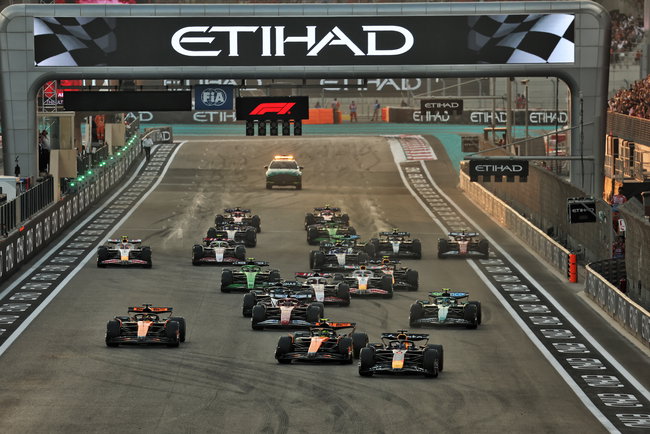
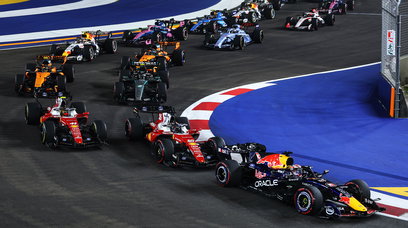
That momentum is being felt at the circuits as well. The 2025 season delivered a record-breaking combined race attendance of 6.7 million, the highest in F1 history and up from 6.5 million in 2024 and just 4.2 million in 2019. Nineteen of the 24 events were completely sold out, with 11 new attendance records set.
Four race weekends attracted more than 400,000 spectators, including Australia’s 465,000 and an extraordinary 500,000 at the British Grand Prix.
A further 10 events surpassed the 300,000 mark, with Monza, Canada and Belgium among the standouts.
Digital dominance and broadcast growth
Formula 1’s digital presence continues to power much of that growth. For the fifth year in a row, F1 has been the fastest-growing global sports league on social media, generating more than 2.3 billion engagements and outperforming the NBA, NFL, Premier League and UEFA Champions League.
The championship’s total social following has climbed to 114.5 million, a 19 per cent year-on-year increase and a remarkable rise from just 18.7 million in 2018.
TikTok led platform growth at 91 per cent, followed by YouTube (53 per cent) and Facebook (51 per cent), while Chinese platforms grew by 35 per cent compared to 2024.
The Abu Dhabi Grand Prix finale generated the highest impressions and engagement ever across F1’s major social platforms.
YouTube highlights viewership rose by 33 per cent year-on-year, with the Australian Grand Prix highlights attracting 13 million views in their first week.
Traditional broadcast figures remain equally strong. Average global weekend viewership sits at around 70 million, with the Belgian Grand Prix drawing over 80 million viewers – the largest audience of the season.
In the United States, ESPN recorded its highest-ever single-season Formula 1 viewership, while markets such as Germany, Brazil, France, China and the Middle East all posted notable growth.
Most read


In this article
Never miss a thing from the Formula 1 season! Add the 2026 F1 schedule to your calendar at the touch of a button. Subscribe below and put the dates and times of every race directly on your PC or smartphone, so you don't miss a second from the new season.
Download the F1 calendar Download the F1 calendar
A variant with just the race and qualifying is also available.
Click here to download it..






Join the conversation!