


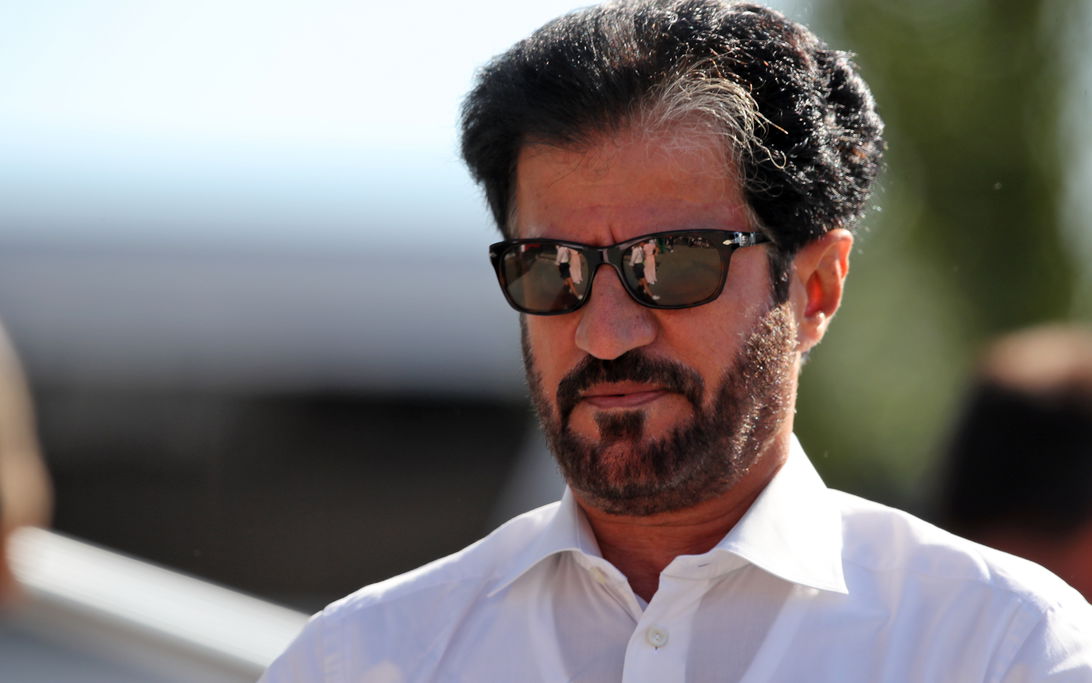
FIA president Mohammed Ben Sulayem has confirmed F1 will return to V8 engines at the start of the next decade.
The subject has been on the table for a considerable period of time, and has recently gathered traction following the introduction this year of what has become a much-maligned power unit incorporating a 50-50 split between combustion and electrical energy.
Ben Sulayem indicated last year his desire for F1 to return to a V8 or a V10 engine run on sustainable fuels. That idea was rejected by the power unit manufacturers after signing up to the new system a few years ago.
Over time, there has been a subtle shift in opinion, not least because the current PU remains highly expensive for manufacturers and customers, despite the axing of the MGU-H, and it is heavy given the weight of the battery required to service the electrical element.
The manufacturers are also no longer driven by electrification of their road cars, instead willing to diversify due to the focus on sustainable fuels, opening the door for F1 to return to V8s which last graced the sport from 2006 to 2013, and were popular with fans.
“It’s coming,” said Ben Sulayem, speaking to select media, including RacingNews365, in referring to a switch back to V8s or V10s. "Oh yes, it is coming. At the end of the day, it’s a matter of time."
Highlighting the difference maker behind his positivity, Ben Sulayem added: "In 2031, the FIA will have the power to do it, without any votes from the PUMs [power unit manufacturers]. That’s the regulations.
"But we want to bring it one year earlier, which everyone [externally] now is asking for. When you try to tell them [the PUMs] they say no, but what will come, will come, and it [the power] will come back to the FIA."
As to the reasons behind the switch, Ben Sulayem said: “Let's not talk about the technical side of it. Let's talk about the mission of it.
"The mission will be less complication, not like now. When the MGU-H was there before, it was there to serve a purpose, but none of the manufacturers benefited from it in the real world.
"Now, with just the MGU-K, it's the same engine. It's turbo, it's 1.6 litre."
A return to V10s is not on the cards due to its lack of road relevance to the manufacturers. Although V8s is the preferred route, it will not be a straight normally-aspirated system.
“I feel like a V10…if I ask any of the manufacturers who are in F1 now if they produce any cars with a V10, an era that many of the cars had, but now, no," said Ben Sulayem.
“The most popular and easiest to work with is the V8. You get the sound, less complexity, lightweight.
"You will hear about it very soon, and it will be with a very, very minor electrification, but the main one will be the engine. It will not be something like now, which is a 46-54 split. There will be very minimal [electric] power.
“The V8, you see it [in road cars] with Ferrari, Mercedes, Audi, Cadillac. You see it with most of the manufacturers, and that gives you a lightweight car."
Asked on a target for introduction, he said: "I'm targeting 2030. One year before the maturity [of the regulations]. it will happen."
Indicating "positive" remarks on the change from the manufacturers, Ben Sulayem said: "They want it to happen.
"But let's say the manufacturers don't [vote for it], then one more year and it will be done. It's not a matter of, 'Do I need their support?' No, it will be done. V8 is coming.”
Most read

In this article
Never miss a thing from the Formula 1 season! Add the 2026 F1 schedule to your calendar at the touch of a button. Subscribe below and put the dates and times of every race directly on your PC or smartphone, so you don't miss a second from the new season.
Download the F1 calendar Download the F1 calendar
A variant with just the race and qualifying is also available.
Click here to download it..





Join the conversation!