


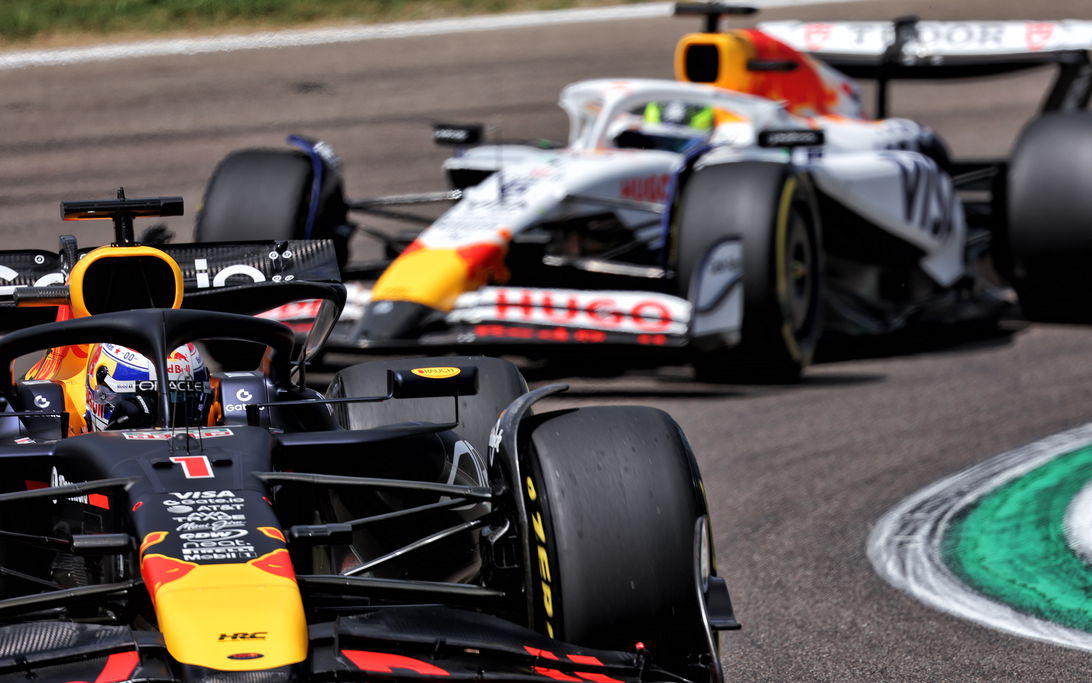
For Isack Hadjar, a dream came true in late 2025 when his strong debut season was rewarded with a promotion to Red Bull at the expense of Yuki Tsunoda.
Despite the ignominy of his formation lap crash on his F1 debut in the season-opening Australian Grand Prix, Hadjar went on to score points in 11 of the following 23 grands prix, including a high of standing on the podium at Zandvoort after finishing third in the Dutch GP.
Red Bull's management saw enough, and they duly afforded the talented French-Algerian driver the opportunity of a lifetime.
Understandably, Hadjar was delirious after the announcement, but he also knows he is about to embark on the biggest challenge of his life.
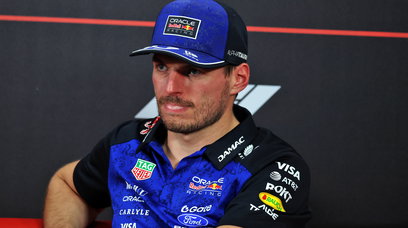
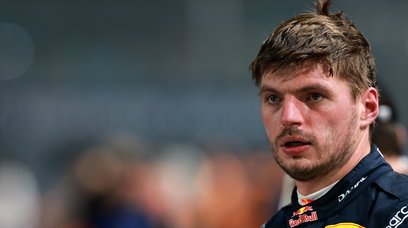
After all, Max Verstappen has left no stone unturned in going up against his team-mates in recent years, with Tsunoda being the most recent example.
Last season, Verstappen put in a stunning array of impressive performances that allowed him to battle for the drivers' title right up to the final race in Abu Dhabi. In stark contrast, Tsunoda collected a miserable 30 points in 22 races.
Appreciably, Hadjar has been frequently warned about the upcoming internal battle with Verstappen at Red Bull, notably that he could easily be broken by the Dutchman before he realises it.
Remarkably, Hadjar goes into the season accepting the fact that he will be second best to Verstappen. The question is: just how big will the deficit be?
Will the new regulations come to Hadjar's aid?
Hadjar, though, does not have to be so defeatist or realistic, depending on your perspective.
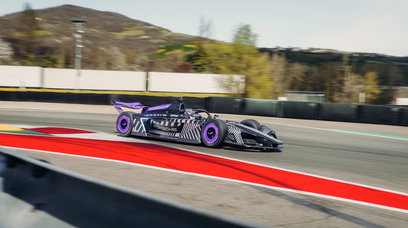
After all, Hadjar boasts one advantage that his predecessors did not possess, notably the sweeping regulations changes in F1 as the sport ushers in new cars and engines, leaving all drivers on a journey of discovery. Adaptability will be put to the test.
It means Hadjar will not be stepping into a car that Verstappen already knows inside out. Both men are starting from scratch.
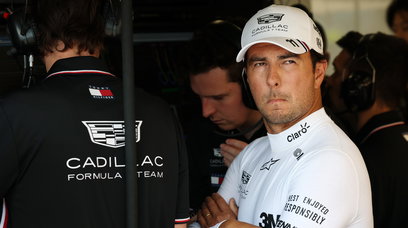
As Sergio Pérez proved in the past, that is an opportunity to make things harder for Verstappen. In 2022, at the start of the previous regulation cycle, Pérez was able to maintain pace with Verstappen in the early stages of the season.
It earned him a contract extension, and he eventually stayed with Red Bull through to 2024.
Naturally, Pérez was at a greater disadvantage by the end of 2022, but he did what Red Bull asked of him as he was regularly within three tenths of a second of Verstappen, which allowed him to play a significant role during races.
If Hadjar can do the same in 2026, Red Bull should be satisfied.
Adaptability to new circuits
Hadjar also proved last year that he has the necessary pure speed.
Helmut Marko regularly saw an important "Verstappen quality" in the 21-year-old, in that he was immediately able to get up to speed during the free practice sessions.
Hadjar needed little time to get the most out of his Racing Bulls machinery, even when he did not know the track, and the latter was frequently the case in 2025. This point underlines Hadjar's adaptability, an asset that could certainly pay off in 2026.
The new cars require a different approach. Given the new tools available, a driver will have to think outside the box to extract a good lap time over a race distance. This is where Hadjar can put his qualities to good use.
Whether it will be enough to seriously test Verstappen remains to be seen, of course.
The fact is that Hadjar has only one year of F1 experience, and Verstappen has never spared his team-mates.
At least the stars are favourably aligned for Hadjar in 2026. It is now a case of whether he can make the most of the situation.
Also interesting:
The 2026 F1 Cars Revealed: Everything You Need to Know!
Discover how the 2026 F1 regulations will revolutionise the sport, with a shift to movable wings instead of traditional DRS, to the increased electrical power in the hybrid systems, and the introduction of 100% sustainable fuel.
Most read

In this article
Never miss a thing from the Formula 1 season! Add the 2026 F1 schedule to your calendar at the touch of a button. Subscribe below and put the dates and times of every race directly on your PC or smartphone, so you don't miss a second from the new season.
Download the F1 calendar Download the F1 calendar
A variant with just the race and qualifying is also available.
Click here to download it..





Join the conversation!