


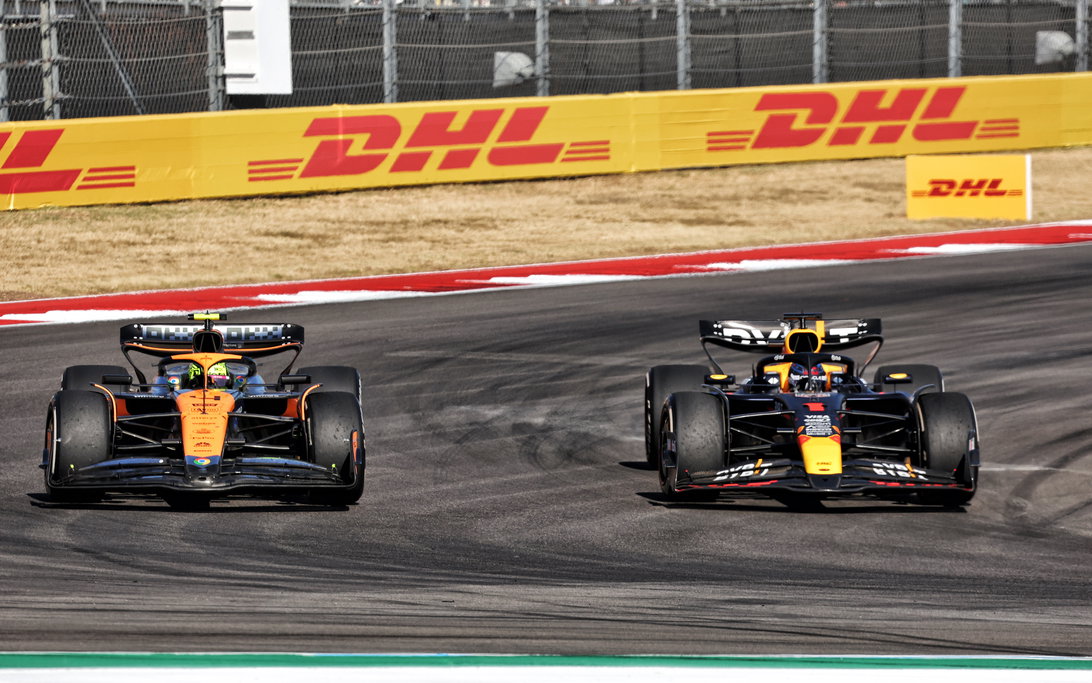
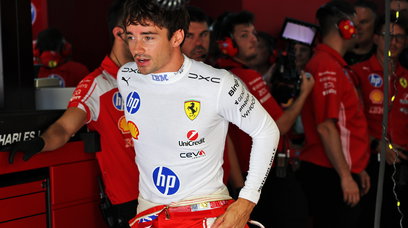
Ferrari's most recent one-two finish, Charles Leclerc leading home Carlos Sainz at the 2024 United States Grand Prix, turns two years old today, and it remains the Scuderia's 87th such result in its history.
But the race is remembered less for the Scuderia up front than for what unfolded behind them, a clash between Max Verstappen and Lando Norris that reshaped how Formula 1 polices wheel-to-wheel racing.
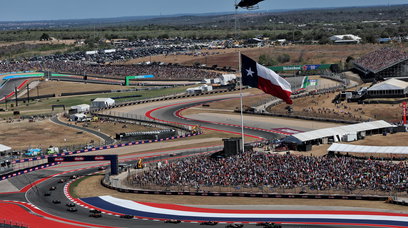
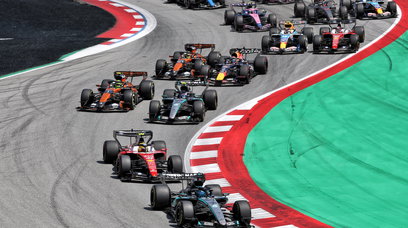
Leclerc took the lead at Circuit of the Americas on the opening lap and was never seriously troubled, crossing the line eight-and-a-half seconds clear of his team-mate.
It completed a rare afternoon of Ferrari dominance in a season otherwise dominated by Red Bull and McLaren.
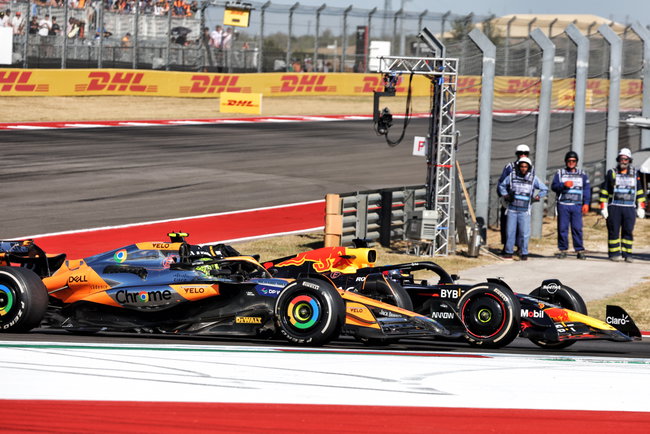
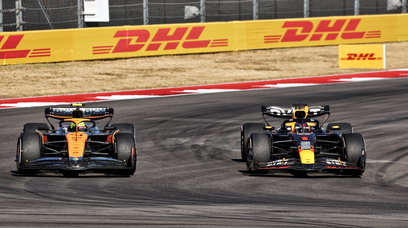
Yet the story of the day was Turn 12, where Norris attempted to pass Verstappen around the outside for third place in the closing laps.
The McLaren driver ran wide, rejoined ahead of the Red Bull, and held the position to the flag, setting up one of the most consequential stewards' decisions of the Verstappen-Norris title fight.
[Article continues below]
Viewed by others:
The ruling that followed
The stewards determined Norris had not been level with Verstappen at the apex, meaning he had lost the "right" to the corner under the Driving Standards Guidelines before running off track and rejoining in front.
"Car 4 was overtaking Car 1 on the outside, but was not level with Car 1 at the apex. Therefore, under the Driving Standards Guidelines, Car 4 had lost the 'right' to the corner," the stewards' document read via the FIA's official publication system.
"Accordingly, as Car 4 left the track and returned in front of Car 1, it is deemed to be a case of leaving the track and gaining a lasting advantage."
A five-second penalty followed, reduced from the guideline baseline of ten seconds because Norris had been forced wide by Verstappen's proximity. It dropped the Briton to fourth and promoted Verstappen to the final podium spot, widening the Dutchman's championship advantage at a critical stage of the title battle.
McLaren team principal Andrea Stella was scathing in his assessment, arguing that the stewards had got it wrong.
"My view is that the way the stewards interfered with a beautiful piece of motorsport was inappropriate because both cars went off track, so both cars gained an advantage."
Norris himself stood by his approach, saying he believed Verstappen should have yielded.
"I mean, clearly I didn't give the position back because we thought we were in the right; clearly we weren't. I still think we were, considering Max went off the track; normally if you defend your position and you go off the track, you have to give the position up. In that case, I was ahead; I kept my position because he needed to give it back, and that's the way it is."
Red Bull saw no such ambiguity. Team principal Christian Horner called it black and white.
"So for us it was crystal clear that the pass had been made off the track. So, you know, he should have given the place back. He chose not to. So therefore there was a penalty. For us, it was very much a black-and-white scenario."
[Article continues below]
Guidelines rewritten over the winter
The row did not end in Austin. By the following weekend in Mexico City, multiple drivers had raised the ambiguity in the existing wording directly with the FIA, arguing it allowed a defending driver on the inside to release the brakes purely to claim the apex first, regardless of whether they stayed on circuit themselves.
An FIA spokesperson confirmed talks were underway.
"There was a general commitment to continue to update the driving standards guidelines. Bearing in mind the drivers requested the drivers' racing guidelines and agreed to their introduction along with the Grand Prix Drivers' Association, each time they are updated it is consultation with the drivers."
Discussions culminated at a further meeting during the Qatar Grand Prix weekend, where the GPDA and FIA agreed to defer formal rewrites until the new year. George Russell, present at those talks, described progress without divulging detail.
"It was pretty productive. I don't want to go into detail what was spoken about. But I think a lot of drivers are aligned that if you are the overtaking car on the inside, rule number one is you have to be..."
The revised Driving Standards Guidelines were published by the FIA in February 2025. They explicitly required an overtaking car on the inside to take a reasonable racing line and stay within track limits throughout a move, closing the apex-ownership loophole exposed at COTA.
Verstappen, for his part, framed the new era simply: "I think it's quite clear what is allowed and what isn't allowed, so I think everyone is adjusting to that... I don't know, for me it's always better to leave it more natural. But I just follow the rules."
Also interesting:
Join RacingNews365's Ian Parkes, Sam Coop and Nick Golding as they look ahead to this weekend's United States Grand Prix! Lewis Hamilton and Ferrari being urged to have a deep conversation is a big discussion, as is all three believing Max Verstappen is the favourite this weekend.
Rather watch this podcast? Then click here!


Most read
In this article
Never miss a thing from the Formula 1 season! Add the 2026 F1 schedule to your calendar at the touch of a button. Subscribe below and put the dates and times of every race directly on your PC or smartphone, so you don't miss a second from the new season.
Download the F1 calendar Download the F1 calendar
A variant with just the race and qualifying is also available.
Click here to download it..


Join the conversation!