


The 2025 Formula 1 season will be remembered as one of the most dramatic and destabilising in recent memory.
While the championship battle went down to the wire, it was the off-track decisions — ruthless driver calls, boardroom upheaval and long-term strategic pivots — that truly reshaped the sport.
With the 2026 regulations representing the biggest technical reset in F1's modern era, the choices made this year will redefine the championship's future hierarchy.
These six moments stand out as the most controversial and decisive developments of a season that changed everything.
Horner out, Mekies in: Red Bull’s power shift
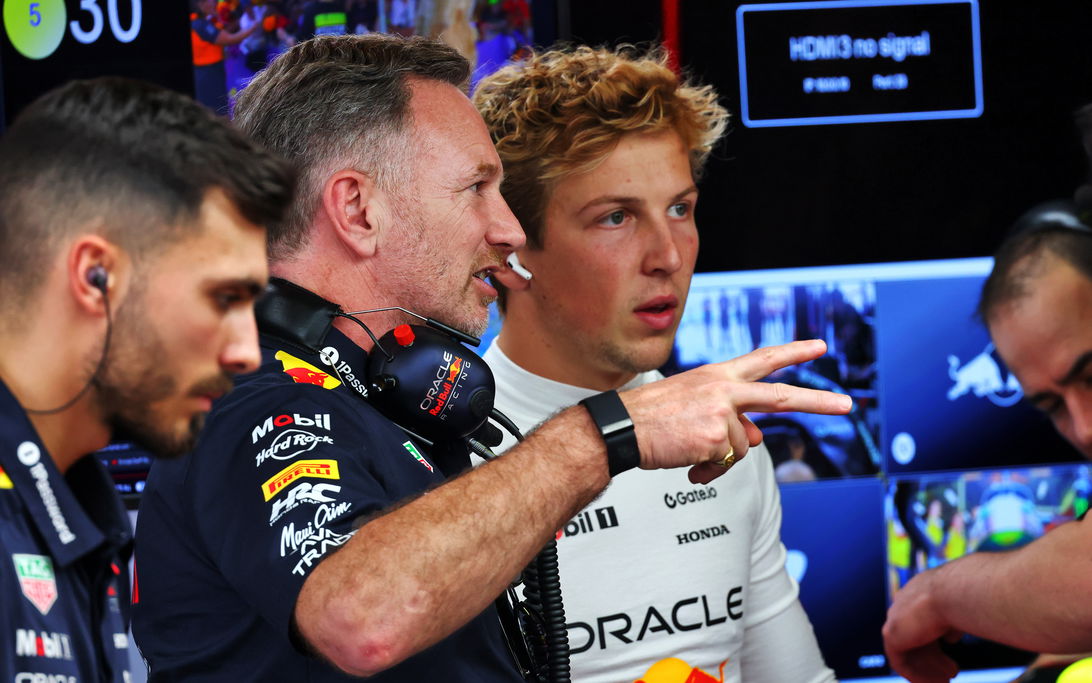
Christian Horner’s dismissal on 9 July marked the most seismic management change of the season.
After more than two decades at the helm, Red Bull removed the only team principal it had ever known amid a convergence of sporting, political and governance pressures rather than a single defining incident.
Red Bull CEO Oliver Mintzlaff pointed to competitive regression, internal power struggles following Dietrich Mateschitz’s death, and the need for a leadership structure better aligned with Red Bull’s transformation into a full works power unit manufacturer for 2026.
"Christian achieved extraordinary success," Mintzlaff said, "but we felt it was time to turn the page. We cannot rely on history alone."
Laurent Mekies assumed the combined team principal and CEO role, bringing a calmer, more technically integrated approach.
Since the change, Red Bull stabilised its internal structure, addressed early-season correlation issues, and re-emerged as McLaren’s primary challenger in the second half of the year.
Mekies' impact has been evolutionary rather than revolutionary — but that may prove critical as Red Bull prepares for its most complex challenge yet: entering the 2026 era as a power unit manufacturer.
Cadillac’s arrival confirms F1’s new era
The most significant structural change came in March when Cadillac received final approval to join Formula 1 as its 11th team from 2026.
Backed by General Motors, TWG Motorsports and a $450 million expansion fee, the entry marks the first grid expansion since Haas joined in 2016.
Cadillac’s arrival is more than symbolic. GM has committed to developing a full works operation later in the decade, including power units and gearboxes, while using Ferrari engines during its initial seasons to avoid the pitfalls that plague new entrants.
With a multi-site operation across the United States and the UK and a veteran driver pairing of Sergio Perez and Valtteri Bottas, Cadillac enters with immediate credibility.
Crucially, the timing allows it to develop alongside established teams under the new regulations rather than playing technical catch-up.
For Formula 1, Cadillac’s entry validates its commercial expansion strategy and strengthens its foothold in the American market. The grid has not just grown — it has fundamentally evolved.
Verstappen’s commitment ends Mercedes speculation - for now
Max Verstappen’s declaration ahead of the Hungarian Grand Prix that he would remain with Red Bull for 2026 finally silenced months of speculation linking him with Mercedes.
The timing was telling, coming during Red Bull’s most vulnerable period in years and soon after the promotion of Mekies.
"I think it’s time to stop all the rumours," Verstappen said. "For me it’s always been quite clear that I was staying anyway," while adding that his long-term future remains conditional on whether the 2026 regulations are "nice and fun."
Speculation intensified as McLaren surged early in the season and Red Bull underwent leadership upheaval.
Verstappen’s commitment steadied the team, and Red Bull rebounded to win six of the final nine grands prix — though he narrowly lost the championship to Lando Norris by two points.
For Red Bull, Verstappen’s loyalty is existential heading into 2026. For Mercedes, it closed the door on its boldest driver pursuit since Lewis Hamilton’s 2013 switch — at least for now...
Alpine’s power unit divorce ends an era
Alpine’s decision to abandon Renault power units and become a Mercedes customer team from 2026 marked the end of a historic chapter.
Years of underperformance and escalating costs at Viry-Chatillon forced Renault’s leadership to question the value of continuing as a works manufacturer.
Flavio Briatore emerged as the strongest advocate for the switch, favouring competitiveness and cost control over brand identity.
The deal mirrors Aston Martin’s old Mercedes arrangement — the team it is effectively replacing in Mercedes' supply— including gearbox and rear suspension supply, though Alpine intends to produce its own gearbox from 2027.
The Viry facility will close at the end of 2025, ending France’s presence as an F1 engine manufacturer. Politically painful, the decision is strategically pragmatic.
For 2026, Alpine trades independence for proven performance. Whether this gamble elevates them into consistent contention — or highlights the limits of customer status — may influence how other manufacturers approach Formula 1’s escalating costs.
Lawson’s brutal Red Bull reality check
Liam Lawson’s promotion to Red Bull Racing lasted just two races, exposing the unforgiving nature of Formula 1’s sharp end.
Elevated from Racing Bulls after only 11 previous grand prix starts, the New Zealander suffered a Q1 elimination and race-ending crash in Australia before qualifying last and finishing outside the points in China.
Horner admitted the call had been premature, saying it had asked too much of Lawson, too soon. "He might have adapted,” Horner added, "but we don’t have that amount of time."
The consequences were severe. Yuki Tsunoda, promoted in Lawson’s place, scored just 30 points for Red Bull all season, while Lawson collected 38 upon returning to Racing Bulls.
Max Verstappen openly questioned the move, telling Viaplay: "Two races for a team-mate — of course I didn’t agree with that."
For 2026, Lawson remains stuck in Red Bull’s junior team, while Tsunoda was ultimately left without an F1 seat.
Alpine's rookie reshuffle
Jack Doohan’s Formula 1 campaign effectively ended after just six races when Alpine replaced him with Franco Colapinto ahead of the Emilia-Romagna Grand Prix.
Doohan struggled in his opening races, including three incidents and a first-lap collision with Liam Lawson in Miami, prompting the team to make the change.
Colapinto, on loan from Williams following his nine-race stint in late 2024, initially struggled to adapt to Alpine’s car, qualifying near the back and finishing outside the points in every race.
While he showed modest improvement in pace and racecraft as the season progressed, he was unable to deliver any points for the team.
Which of the six moments mentioned do you think is the most defining one of the 2025 F1 season? Let us know in the comment section and by voting below in the latest poll by RacingNews365.
Most read
In this article
Never miss a thing from the Formula 1 season! Add the 2026 F1 schedule to your calendar at the touch of a button. Subscribe below and put the dates and times of every race directly on your PC or smartphone, so you don't miss a second from the new season.
Download the F1 calendar Download the F1 calendar
A variant with just the race and qualifying is also available.
Click here to download it..





Join the conversation!