


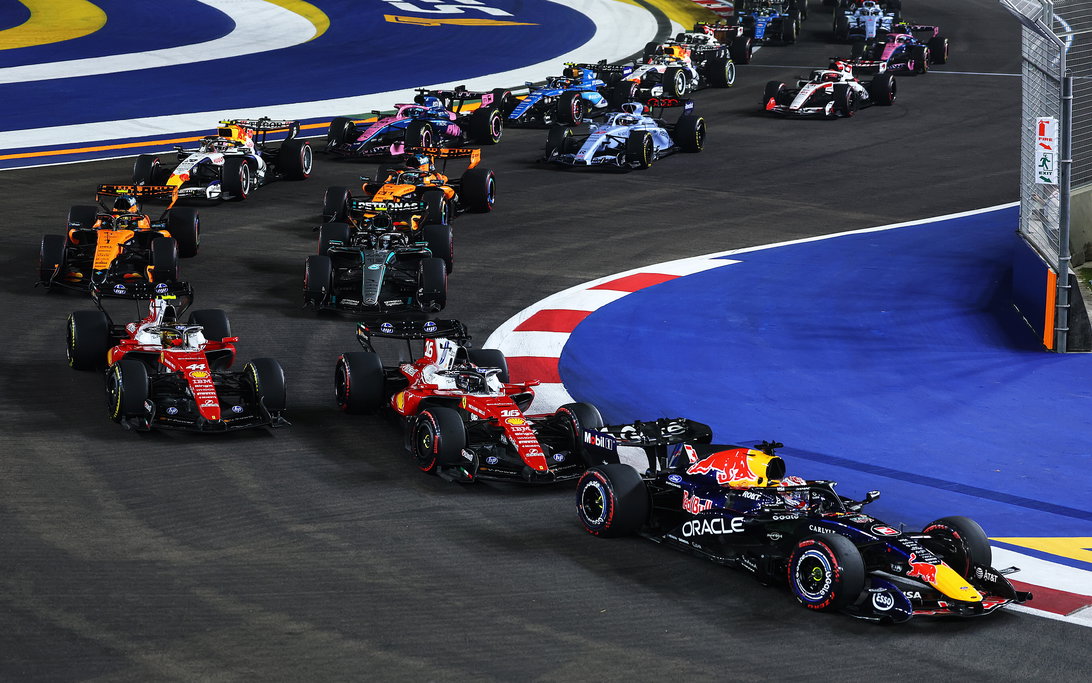
Formula 1's reduced grand prix race distance, introduced for 2027 to accommodate a major change to the power unit regulations, will only last a single season.
From 2028, the standard race distance will revert to its previous length, 305 kilometres, the FIA has confirmed after the decision to cut it to 290 kilometres as a temporary measure next year.
The FIA and Formula 1 have agreed to further adjust the balance between the internal combustion engine and the electric motor from 2027, following criticism of the current power unit regulations.
Under the 2026 rules, the combustion engine and the electrical system provide 53 and 47 per cent of total power respectively. That split will shift to 58/42 from 2027, before a 60/40 ratio is targeted for 2028.
But what effect does that have on race distances?
The change means the power units become more reliant on the combustion engine once again.
To boost output from that side of the unit, the permitted fuel flow is also being increased, which allows the cars to burn more fuel during a grand prix.
To cover the same race distance, teams could therefore need larger fuel tanks. That may require changes to the chassis, bringing extra development work and cost with it.
To limit those complications for 2027, the standard race distance is being cut from 305 to 290 kilometres. That way, teams will not need to make immediate, far-reaching changes to their cars to accommodate the higher fuel requirement.
Monaco remains the exception, with its race distance staying at 260 kilometres.
Just a one-year fix
Notably, the FIA has already written changes for the 2028 season into the 2027 regulations, which were recently published after the latest meeting of the World Motor Sport Council (WMSC).
Article B2.5.2 states that the standard race distance will return to 305 kilometres from that year, coinciding with the next step in the power unit rules, when the combustion engine-to-electric motor ratio moves further towards 60/40, and the fuel flow limit is raised again.
In other words, the shorter races due to arrive in 2027 are not a lasting fix but a stopgap, buying teams time before they have to confront the bigger packaging challenge that comes with the final step of the power unit shake-up.
The return to the longer race distance raises the question of how teams will handle the extra fuel requirement from 2028 onwards.
The regulation change itself does not confirm which technical solutions will be chosen, or what adjustments teams will ultimately make to their chassis.
Also interesting:
Join RacingNews365's Ian Parkes, Sam Coop and Nick Golding as they look ahead to this weekend's United States Grand Prix! Lewis Hamilton and Ferrari being urged to have a deep conversation is a big discussion, as is all three believing Max Verstappen is the favourite this weekend.
Rather watch this podcast? Then click here!


Most read


Never miss a thing from the Formula 1 season! Add the 2026 F1 schedule to your calendar at the touch of a button. Subscribe below and put the dates and times of every race directly on your PC or smartphone, so you don't miss a second from the new season.
Download the F1 calendar Download the F1 calendar
A variant with just the race and qualifying is also available.
Click here to download it..


Join the conversation!