


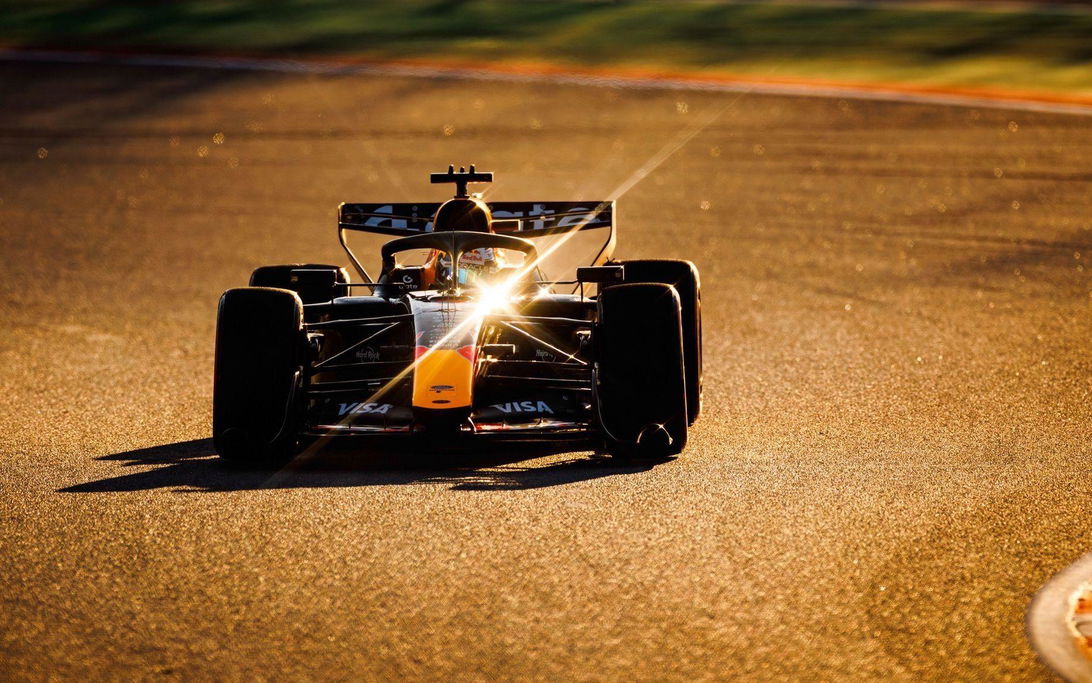
Martin Brundle has come to the defence of F1's new look following suggestions that the sport has lost its identity under the weight of the latest regulations.
New power units and aerodynamics have been introduced for this season, and whilst generally well received by the drivers, there are concerns, given the switch to the cars being powered by 50 per cent combustion and 50 per cent electrical energy.
It will result in drivers needing to lift and coast on a qualifying lap to ensure maximum deployment is obtained from a battery now driven by a 350kW MGU-K, up from 120kW in previous years, and with the MGU-H now obsolete.
Energy harvesting will also become paramount, particularly as drivers will have to determine when it can be used, primarily to aid overtaking.
Former F1 driver and Sky Sports F1 co-commentator Brundle has highlighted the fact that throughout F1 history, drivers have always been forced to manage and protect various aspects of their cars. This season, the focus will be on the battery.
"If you're going to go flat out for a long time, you've got to protect things," said Brundle, speaking to select media, including RacingNews365.
"It's always been the same, whether it was Sterling [Moss] and [Juan Manuel] Fangio back in the day, or Jackie [Stewart], Graham [Hill] and Jim [Clark].
"Back then, it was dog rings, drive shafts, universal joints, gearboxes in general, engines, suspension, and rose joints."
Referring to his era of driving in the 1980s and 1990s, he added: "We were always clutch and engine. We were always protecting something.
"Even in the fearsome '80s turbo days, we had 220 litres of fuel, and we were lifting and coasting brutally through the entire race, because that was the only way to get to the end with any kind of performance or fuel left.
"I ran out once, going to the line, and lost third place in Adelaide because I wasn't careful enough on that, so you've always had to protect something along the way. Tyres are a good one, especially these days."
Basketball score concern
Brundle feels that two drivers who would have excelled in the era about to be unleashed this year are Ayrton Senna and Michael Schumacher, based on the fact that the drivers will have to think tactically and be astute in when to deploy the battery power.
"Ayrton and Michael would love these cars, because they had the capacity to use all the tools, and [to work with] the people who knew how best to use the tools, and get the best out of the car," he said.
"What's happened is that your universal joints, brakes, and your rose joints protection is now your battery, because the cars are bulletproof in many other respects.
"I think the specific challenge has changed, but the overall challenge hasn't, personally."
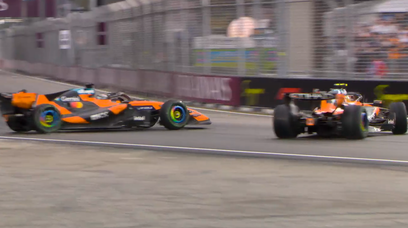
Highlighting one area of concern, though, is what the battery deployment and how it will be used throughout a grand prix will do for overtaking, which is meant to be easier this season under the new regulations.
Brundle is worried it may swing too far in the direction that it becomes too easy to pass.
"Four or five great overtakes in a race are wonderful to see," he said. "Sometimes those four or five great overtakes were in a season!
"What I'm worried about, and what we don't want, are a number of overtakes every race that it looks like a basketball game score."
In general, though, Brundle dismissed concerns over the new F1, stating: "Personally, I don't think we've lost the essence [of F1]."
Also interesting:
Join RacingNews365's Ian Parkes and Nick Golding, as they look back on last week's five-day F1 test in Barcelona. McLaren's upgrade strategy is discussed, as is Aston Martin grabbing much attention with its striking AMR26.
Rather watch the podcast? Then click here!


Most read
In this article
Never miss a thing from the Formula 1 season! Add the 2026 F1 schedule to your calendar at the touch of a button. Subscribe below and put the dates and times of every race directly on your PC or smartphone, so you don't miss a second from the new season.
Download the F1 calendar Download the F1 calendar
A variant with just the race and qualifying is also available.
Click here to download it..





Join the conversation!