


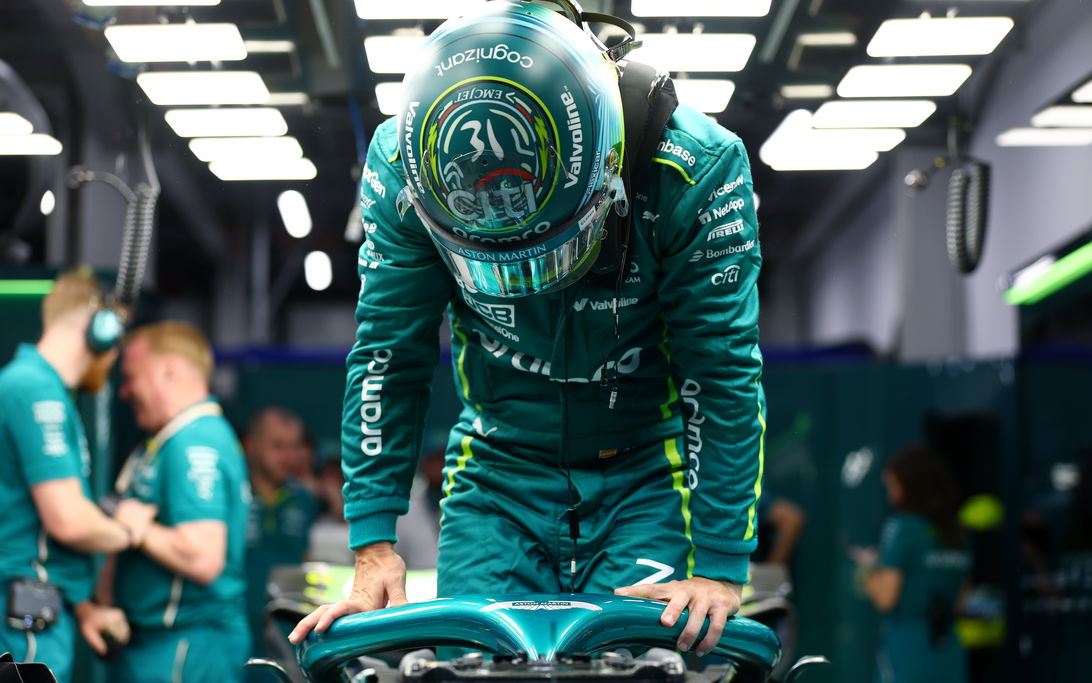
It was not the season Aston Martin arguably envisaged before it started. Or was it?
After two years of finishing fifth in the F1 constructors' championship, the Silverstone-based outfit returned to its seventh place of 2021 and 2022, falling behind a resurgent Williams and even Racing Bulls.
In many respects, it was a season that starkly illustrated the team's transitional phase, with resources deliberately channelled toward its preparations for next season at the expense of immediate competitiveness.
Fernando Alonso's 10th-place finish in the drivers' championship, with just 56 points, marked his most challenging season since the veteran joined Aston Martin in 2023. The 44-year-old endured a litany of misfortune, including five DNFs that severely hampered his points tally.
Technical gremlins struck at the worst moments, with brake failures in China and Mexico, a power unit problem in Monaco, and suspension damage in Italy compounding his frustrations. The other retirement saw him crash out in the season-opening race in Australia.
Although the two-time F1 champion extracted everything from the car, and there were moments of strong pace, and weekends where certain situations felt more promising, overall, the competitiveness was not where he, nor the team, wanted it to be.
His best result was fifth in Hungary, where he demonstrated flashes of brilliance. Such moments, though, were fleeting in what proved to be a season of damage limitation rather than podium-threatening contention.
As for team-mate Lance Stroll, his campaign was wholly underwhelming. He was out-qualified by Alonso in every grand prix, and he finished six places and 25 points behind the Spanish driver.
It was a season where consistency remained elusive, with the gap between Stroll and Alonso highlighting the team's broader performance issues, with both drivers struggling to extract meaningful pace from the AMR25.
Aston building for transformation
Despite the immediate disappointment, Aston Martin's 2025 season must be viewed through the lens of their long-term strategy.
The arrival of Adrian Newey represents the cornerstone of their 2026 revolution. Initially appointed as managing technical partner, it was announced late in the season that he would be taking on the role of team principal for next year.
With Newey shaping the 2026 project from the ground up, Aston will at least go into the new season with renewed belief, hoping his renowned technical genius will elevate the team to new heights, and ultimately on to grand prix victories and a title challenge.
The Honda partnership provides the technical backbone for their reset ambitions. Moving from customer Mercedes power units to a works relationship with the Japanese manufacturer offers the opportunity to develop a more integrated package.
The new power unit regulations, featuring active aerodynamics and enhanced electrical power recovery systems, align perfectly with Honda's sustainability objectives.
Aston Martin's state-of-the-art Technology Campus in Silverstone is finally reaching full operational capacity, complete with a new wind tunnel and simulator.
For the first time since 2008, the team will develop its own transmission, rear suspension, and associated systems, marking a genuine transition from customer to works team status.
Whilst the new regulations represent a reset for everyone on the grid, Aston's ambition and resources should pave the way for real progress next year.
Following the AMR26's launch on February 9, the start of the new season will reveal whether the team's approach will have paid dividends.
Certainly, with Newey's technical genius, Honda's engineering prowess, and Alonso's championship pedigree, the pieces are assembled for a potential challenge.
Whether this ambitious project can deliver remains the defining question heading into F1's new era.
Most read


In this article
Never miss a thing from the Formula 1 season! Add the 2026 F1 schedule to your calendar at the touch of a button. Subscribe below and put the dates and times of every race directly on your PC or smartphone, so you don't miss a second from the new season.
Download the F1 calendar Download the F1 calendar
A variant with just the race and qualifying is also available.
Click here to download it..





Join the conversation!