

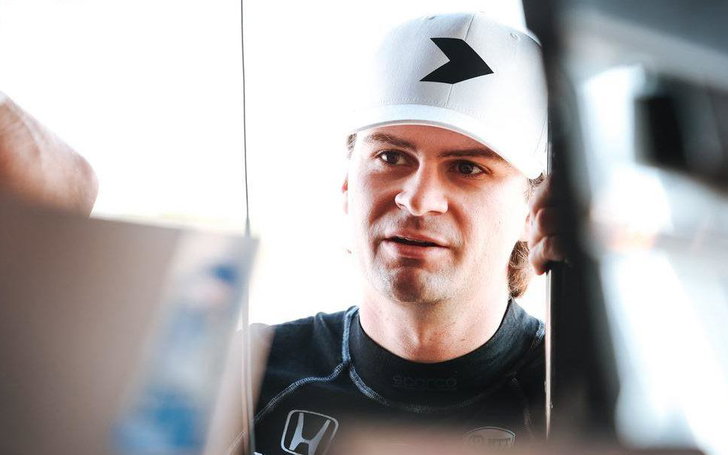
Nine-time IndyCar winner Colton Herta leaving the American single-seater series in pursuit of an F1 seat was one of the most compelling stories to emerge from motorsport last year.
At 25, he has made the unusual — but necessary — step of racing in Formula 2, despite having vastly more experience than the average F2 driver.
It will undoubtedly form one of the most intriguing and layered narratives of the 2026 campaign, as he works towards finally securing an elusive FIA super licence, which will allow him to achieve his "dream" of racing in F1.
One of the most highly-regarded talents in America, Herta has tested F1 machinery before and is said to have wowed the top brass at Sauber — now Audi — by setting quicker times than then-drivers Kimi Raikkonen, the 2007 F1 drivers' champion, and Antonio Giovinazzi in the team's simulator.
And he came agonisingly close to reaching F1 in 2022, too, when he was in line for a seat with AlphaTauri after Pierre Gasly opted for pastures new at Alpine.
However, he fell short of the required 40 super licence points, holding only 32 at the time. The FIA refused to grant an exemption, and his tally dropped to 29 at the end of the campaign.
Interestingly, under the recently revised IndyCar super licence points allocation, Herta would have held 48 points and likely would have taken up a spot on the F1 grid in 2023.
Instead, three further seasons in IndyCar followed, but with only a championship title enough to obtain a super licence outright, Herta's second-place in the standings in 2024 means he is still just short of the threshold.
Viewed by others:
The unconventional step
To satisfy that criterion, he has turned to F2, as the FIA always intended, joining the championship whose main purpose is to prepare drivers for — and act as a springboard to — F1.
Herta will spend the campaign cutting his teeth outside of the United States with Hitech TGR, and is dovetailing that programme with a development driver role at the fledgling Cadillac F1 team, as he looks to become eligible for a full-time F1 seat next year.
Although an aside, what complicates matters is that both Valtteri Bottas and Sergio Perez have signed multi-year contracts to race for the General Motors-backed operation, something that only adds to the intrigue surrounding Herta's situation, given his existing ties to the team through racing for Andretti in IndyCar.
But despite needing only six points — which equates to eighth in the F2 championship — to earn his super licence, he must first successfully navigate the choppy waters of another spec-series. And that will be easier said than done.
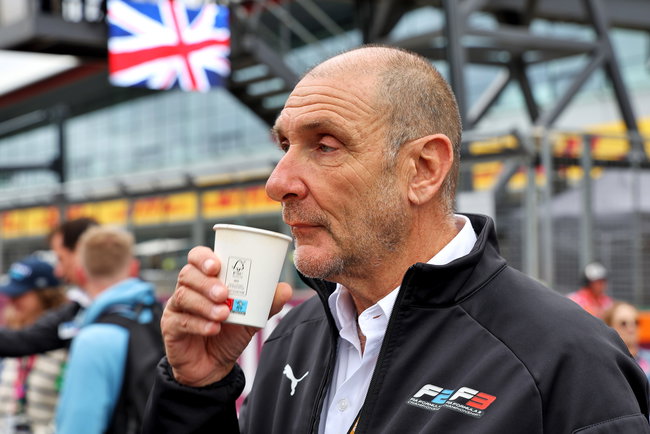
Ahead of the season, RacingNews365 sat down with F2 CEO Bruno Michel to discuss Herta's move and what the unique advantages and disadvantages are for a driver of Herta's calibre stepping into the F1 support paddock.
"He's an experienced driver, and that always helps; he's been racing quite a lot," Michel immediately points out. "He's 25 now, which means he's got quite a lot of racing under his belt. And that, of course, is going to be an advantage for him."
A key area Herta can be expected to have a head start in is his race craft. As a more mature and seasoned driver, he will be able to lean on experience that his rivals simply do not possess.
"I'm sure he's got a race craft that is more developed than the young drivers arriving directly in Formula 2," Michel adds. "So, for sure, it's going to help.
"The other thing I would say, probably the only thing in common that we have, is that IndyCar is also a Dallara car, like ours — even though they're slightly different. But let's say that Dallara has a philosophy, and it's a single-make category like ours.
"So, all this is something that is going to be important for him, and it's going to help him."
The hurdles to overcome
Despite those strengths, Michel is clear that Herta will not be arriving with a ready-made advantage. If anything, the biggest hurdle may be adapting to the compressed and unforgiving structure of an F2 race weekend.
"Then, the difficulties, or sure, are going to be, number one: the format of the weekend, because it's something that he’s not used to," he continues.
"I don't know how much track time you have in IndyCar, but I'm sure you have more than F2 or over a Formula 1 weekend.
"So he will have to be ready to get ready in such a short time, with limited free practice, limited official testing as well, because that's what we're doing to try to limit the cost of the category."
In addition, there are the idiosyncrasies of the Pirelli tyres — notorious for their sensitivity — that Herta must adapt to, as well as unfamiliar engines, and a calendar dominated by European circuits he has never raced on, most of which graduates of FIA F3 will know.
"Of course, the use of the tyres, the use of the engine and the tracks that he doesn't know and that he will have to learn," Michel states.
"I would say that's probably the easiest bit, because the strong drivers are learning the tracks extremely fast; they're working on simulators, and then they get ready quite soon. But for sure, the environment is going to be very different.
"And so he will have, as you say, some advantages are related to his experience, but some — I wouldn't say difficulties — challenges that will be related to the format and the fact that drivers have been in Formula 3, understand the way it works over a race weekend — and Formula 3 is an extremely strong preparation for Formula 2, and he is not going to have that, that's for sure."
Also interesting:
The 2026 F1 Cars Revealed: Everything You Need to Know!
Discover how the 2026 F1 regulations will revolutionise the sport, with a shift to movable wings instead of traditional DRS, to the increased electrical power in the hybrid systems, and the introduction of 100% sustainable fuel.
Explore the latest F1 results and every stat you can imagine - From Max Verstappen to Michael Schumacher and from Ayrton Senna to Lewis Hamilton — explore every stat from the first Grand Prix to the latest race.
Explore the RN365 Stats HubMost read
Interviews RN365 News dossier






Join the conversation!